
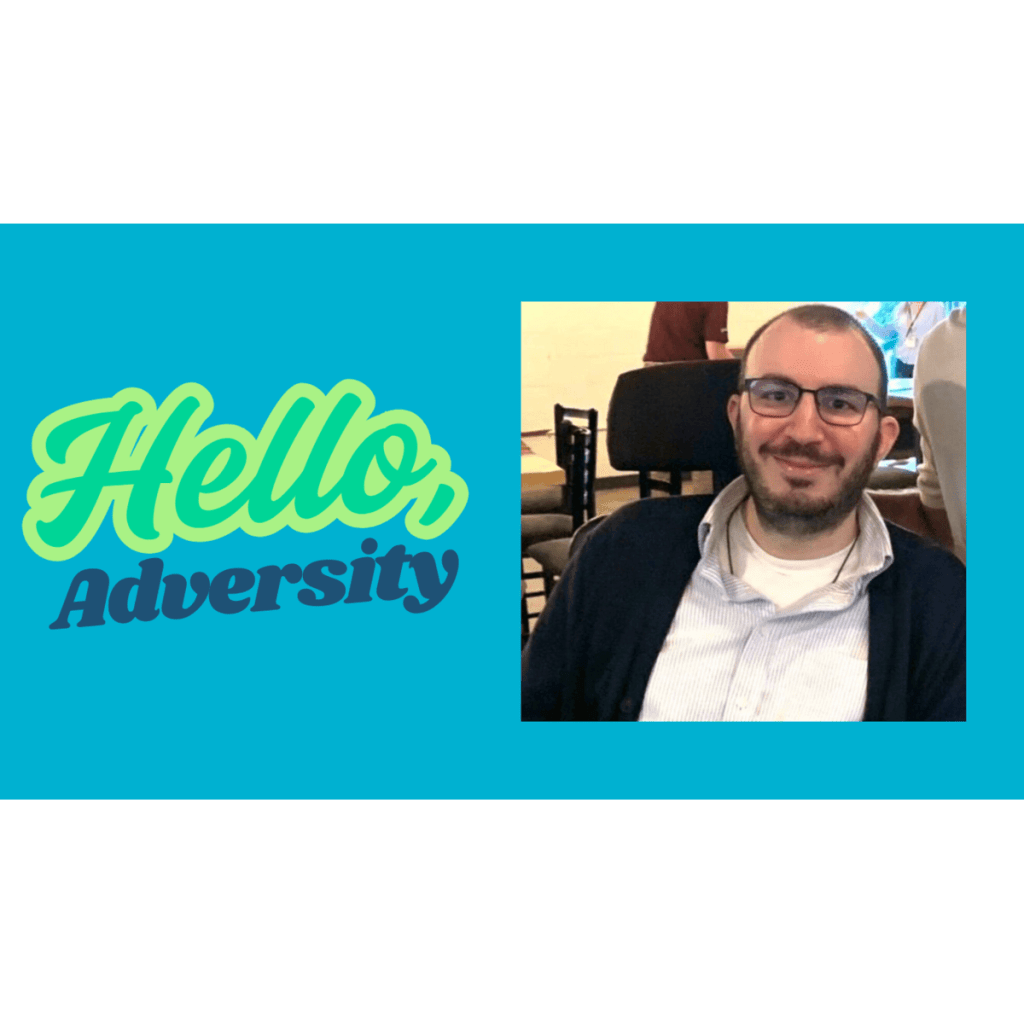
During his senior year of high school, Chris Anselmo was in a car accident that inadvertently changed the trajectory of his life.
Chris was transported to the hospital after the crash, where doctors and nurses ran a battery of tests. But just as the hospital prepared to discharge him, a physician returned with unexpected news: Chris’ creatine kinase (CK) levels — an enzyme that indicates muscle damage — was off the charts.
Normal CK levels typically sit between 22 to 198 international units per litre (IU/L), according to a column published by the Muscle Dystrophy Association (MDA), though this may differ slightly based on gender, race, and physical activity.
“My levels,” Chris reflects, “were over 35,000 IU/L. Hospital staff immediately became concerned that I had suffered an internal injury. Thankfully it wasn’t, but I was told to follow up with an endocrinologist. To hear something wrong was unsettling but it didn’t scare me too much, since I had no symptoms and full mobility.”
Over the next ten months, Chris – who played sports in high school – visited several specialists. Test after test was run, but nobody could make sense of his high CK levels. Finally, a few weeks before heading to college, a thigh muscle biopsy unearthed the answers everyone had been searching for: Chris was missing a critical protein called dysferlin that aids in muscle membrane repair.
In 2004, Chris’ diagnosis – limb-girdle muscular dystrophy type 2B – was commonly referred to as dysferlinopathy, which he describes as “a less precise umbrella term for any disease involving the absence of dysferlin. When I looked the term up online, there wasn’t much to go off of, just that it was highly variable since it was so rare.”
Chris credits the neurologist who diagnosed him with getting the diagnosis correct, as many people he knows were misdiagnosed. But his situation also put him in a unique predicament.
“I was diagnosed before I had symptoms,” Chris explains. “Most people with LGMD are diagnosed once they start experiencing symptoms. In a way, I got a four-year head start on my diagnosis. But I also don’t think I was properly prepared for what was to come.” LGMD2B would eventually cause progressive weakening of his hip and shoulder muscles, but in 2004, his body gave him no indication of what lay ahead.
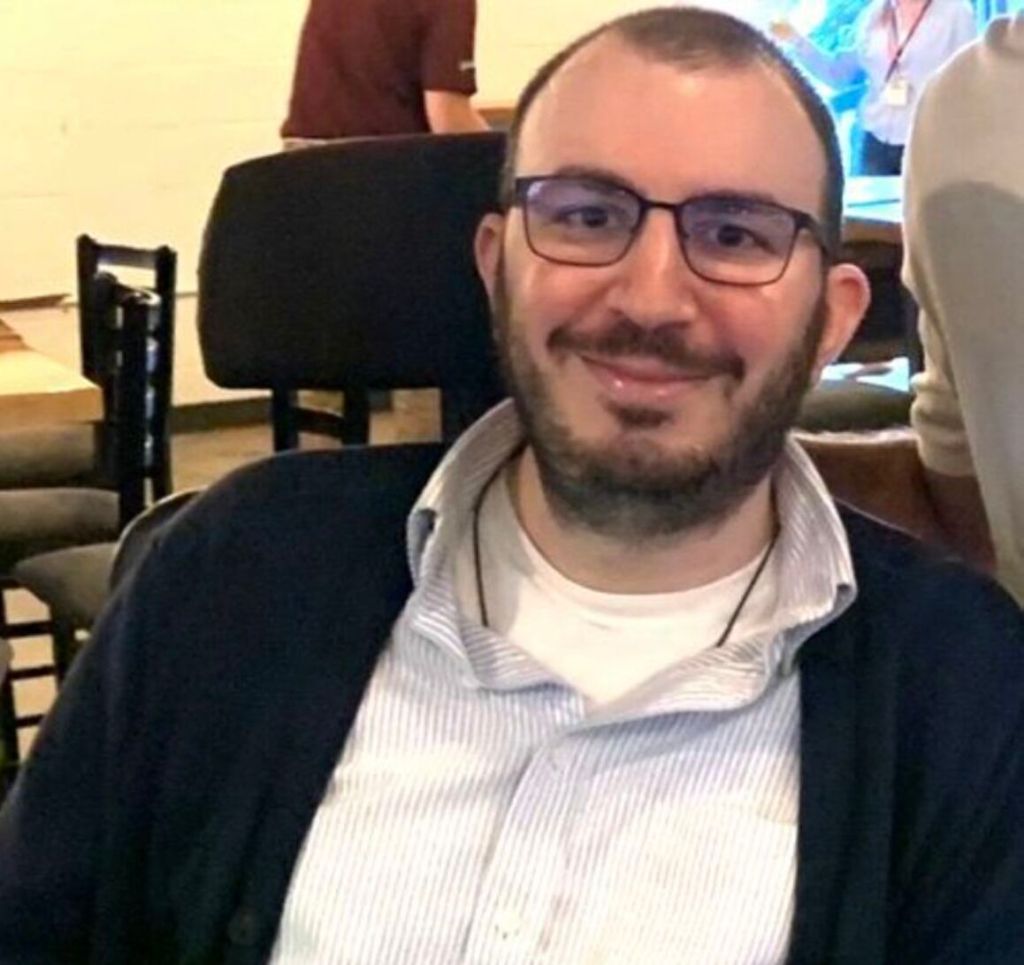
This disconnect between diagnosis and physical experience left him in a strange limbo: medically identified as having a progressive muscular condition while still maintaining full athletic capabilities.
He continues, “The way it was framed to me by my neurologist, symptoms would start later in life, when there would likely be some sort of treatment. And since it wasn’t going to affect me in college, I didn’t think much about it for the next four years.”
Reality Sets In
The four-year grace period between diagnosis and symptom manifestation ended in June 2008, just a few weeks after Chris had graduated from college. He was 21 years old: his diploma still fresh, his future seemingly wide open.
During a routine run after work, an uncomfortable burning sensation shot through his calves, forcing him to stop. Over time, the burning sensation grew worse.
He still remembers that moment, how it marked the official arrival of his LGMD2B — though, in retrospect, Chris can identify subtle warning signs that appeared during his senior year of college.
“The more I think about that period of my life, the more I see potential symptoms,” he recounts. “Once, during my senior year, the elevators were out in my apartment. I ran up the stars to my door, but my legs felt unusually heavy.”
Suddenly, Chris found himself thrust into the reality of living with a rare disease — a reality that he felt wholly unprepared for.
He shares, “Physically, I didn’t understand how the disease would progress, or how fast. It wasn’t clear to me how different preventative actions could affect the pace of progression. I had to learn it myself. Unfortunately, I was way too active, pushed myself too much, and went to the bar a few too many times.”
Every person diagnosed with a progressive condition must eventually confront the adjusted expectations of their new life. For Chris, this reckoning arrived when most of his peers were building careers and relationships with little thought to physical limitations.
“It was scary to think that in a decade, I’d lose the ability to walk and would someday be unable to move my limbs on my own,” he reflects. “It affected my outlook on life, my self-confidence, and my level of hope. It made me horribly depressed. There was no social worker for me to talk to. Now, I believe all care teams should have a social worker or counselor who can walk patients and families through this period. Even letting someone know they’re not alone goes a long way. Caring, empathy, and connection to support systems can change the trajectory of someone’s life post-diagnosis.”
Still, Chris struggled under the weight of this emotional burden. Each new limitation reinforced his sense of loss and grief. He says, “Before my diagnosis, I rarely ever thought about muscular dystrophy. I remember seeing the MDA telethon, but that was about it. I just never thought it would be me.”
From Struggle to Acceptance
Chris’ journey towards acceptance defied the neat narrative arcs we see in fictionalized stories about adversity. He had no dramatic moment of clarity. There was “no singular epiphany” that shifted his mindset. Instead, change arrived through moments of reflection and small decisions to reclaim his life. As he puts it, “I had the gradual realization that I needed to start living again.”
Fear had narrowed his world considerably. The possibility of falling — a common concern for those living with neuromuscular conditions — had metastasized from reasonable caution into a risk-averse, paralyzing anxiety that kept him largely homebound. The psychological burden of LGMD2B had, in some ways, restricted his life even more than the physical limitations.
“I realized that was no way to live,” he tells me. “I started focusing on the goals I had and resolving to achieve them no matter what. In a way, I guess I used to assume that if you have muscular dystrophy, your life would be limited. Now that I’m living it, I know that’s not the case.”
For years, Chris had postponed his personal and professional goals. In 2014, six years after his diagnosis, Chris decided to go to business school.
“If I could do that, it would be a huge confidence boost and would prove I could do anything,” he says. He graduated two years later with an entirely new perspective. “I came to a place of acceptance that I could do a lot, even if it looks different. And resilience followed.”
Notes on Resilience
The American Psychological Association defines resilience as:
the process and outcome of successfully adapting to difficult or challenging life experiences, especially through mental, emotional, and behavioral flexibility and adjustment to external and internal demands.
In other words, resilience is the capacity to withstand difficulty and recover from setbacks. Resilience isn’t an innate trait; it’s a set of skills developed through necessity and practice.
For Chris, resilience came from finding strategies to support his well-being while reassessing his preconceived understanding of his abilities. One way he did so was by writing a blog about life with limb-girdle muscular dystrophy.
“A common myth that’s worth dispelling,” he shares, “is that you can’t live a full, productive, happy life with a muscle disease. You can. Is it fun to have muscular dystrophy? No. Is it the end of the world? Absolutely not.”
Learning to tame his inner critic represented a huge moment of self-confidence and understanding. Under stress, the mind often generates harsh self-assessments – and, unchecked, it’s easy to start feeling like you’re in despair.
“When I have negative self-talk, I stop and ask, ‘Is this really true?’ It’s my way of calling myself out. I also find contrary evidence to whatever my inner critic is saying. If it says ‘you’re a failure,’ I think of times when I’ve succeeded to show that this voice is wrong,” he explains. Cognitive reframing such as this shifts from a passive acceptance of mental patterns to active engagement, allowing the cultivation of more constructive perspectives.
Meditation has also become part of Chris’ resilience toolkit. “I don’t do it well, but I try to do it every day,” he admits. “My mind is always in overdrive, and it’s helpful to quiet that down from time to time.”
These practices complement a broader system of resilience strategies: “finding role models who have been through what I’ve been through; getting adequate sleep; learning deep breathing techniques when I’m feeling anxious; breaking down large, complex tasks into smaller chunks.” By addressing different aspects of wellbeing, Chris has developed a comprehensive framework for navigating challenges.
Hello, Adversity
After writing his blog for several years, Chris began craving broader opportunities. “I was getting tired of writing about myself,” he admits. “At the same time, I knew I wanted to start sharing what I’ve learned on my journey, in the hopes that it could be useful to others going through a tough time, or to anyone diagnosed with a disease.”
With some thoughtful planning, Chris launched his Substack newsletter “Hello, Adversity” in 2023. The newsletter aims to turn his personal strategies and lessons into public resources. “I still write about my journey, but now I also share takeaways for the reader to apply to their own lives,” he explains.
Chris’ newsletter offers valuable guidance to others diagnosed with rare conditions who worry that their dreams have become unreachable. He acknowledges that every rare disease differs in severity, but emphasizes that goals rarely exist within the binary confines of “entirely impossible” or “only achievable as imagined.”
“Dreams aren’t all-or-nothing,” he says. “What might seem impossible at first might not always be that way. Maybe you achieve it in a different way from someone without a rare disease, but that’s okay.”
He points back to his time at business school. “For three years, I didn’t apply because I thought I was too weak to do it. But I forced myself to think through the logistics and support I’d need, and I went for it. Was it more difficult for me? Yes. But it was still possible, which was an important and life-changing insight. If you want to make your dream a reality, don’t give up. Recruit others to help you brainstorm the process, or reach out to someone who’s done something similar and ask how they did it.”
But the beauty in “Hello, Adversity” is the breadth and connectedness of its reach. Adversity is something that every person faces, regardless of their inclusion in the rare disease community.
“I live by example. I’m not afraid to share the difficult parts, but I also share what everyday life is like and how I’ve learned to navigate the ups and downs,” Chris shares. “What I’ve found, and what I think people realize when they read my writing, is that although my situation is unique, the emotions I face are common to the human condition. We all struggle in some way.”
The Future is Bright
At 38 years old, Chris has entered a deliberate career sabbatical to focus on “Hello, Adversity,” as well as writing a book; he hopes to be finished by mid-2025.
Described as “a book of 100 life lessons learned on my rare disease journey, most of which were learned the hard way,” the work aims to become the book Chris wishes he had access to after his diagnosis. The book will cover a variety of topics, including (but not limited to):
- Learning to ask for help
- Finding acceptance
- Taking action
- Dealing with failure
- Persevering through tough times
The book’s framing reveals how thoroughly Chris has integrated his own experience — not as something that happened to him, but as a source of insights: “That’s my purpose. Writing and helping others.”
His combination of humor and serious reflection demonstrates Chris’ commitment to presenting a complete picture of dealing with adversity, rather than a sanitized perspective. Ideally, readers come away better equipped to “handle tough times” and remain confident in the face of seemingly insurmountable challenges.
For Chris, his journey from diagnosis to advocacy has been fraught with obstacles. But looking at it from the other side, he now sees the value that traversing this uncertain terrain has brought. And we see this in his evolving work — that adversity, when engaged with through openness and reflection, can bring gifts to your life.
A Message from Chris
In addition to writing Hello, Adversity, I am beginning to take on coaching clients. My coaching program is for adults living with rare diseases who want to take action on their long-held dreams, but may be feeling “stuck” or unsure of how to make them a reality. If anyone is interested, they can book a free discovery call with me to learn more: https://calendly.com/chrisanselmo/45min
 Rareatives
Leave a comment