

For Vanessa Abraham, a certified speech language pathologist who had been working as a school based speech pathologist since graduating from Northern Arizona University in 2013, her clinical knowledge becaming a challenging lived reality when she suddenly faced an extreme illness in 2019.

Approximately one week after what Vanessa had assumed was the flu (or at least a bad cold), she sat up in bed around 1 AM – then promptly fell out of it.
“I realized something was truly off,” she explains, “and began to wonder why the medication from the urgent care office, prescribed the day before, simply wasn’t working. Usually my illnesses subside within two or three days. This wasn’t going away. I kept declining.”
On the drive to the emergency room, her vision doubled. Her neck pain grew increasingly more intense. Although Vanessa hoped it was something like it pinched nerve, she felt panicked.
“Little did I know, it was a virus paralyzing my upper body,” she reflects.
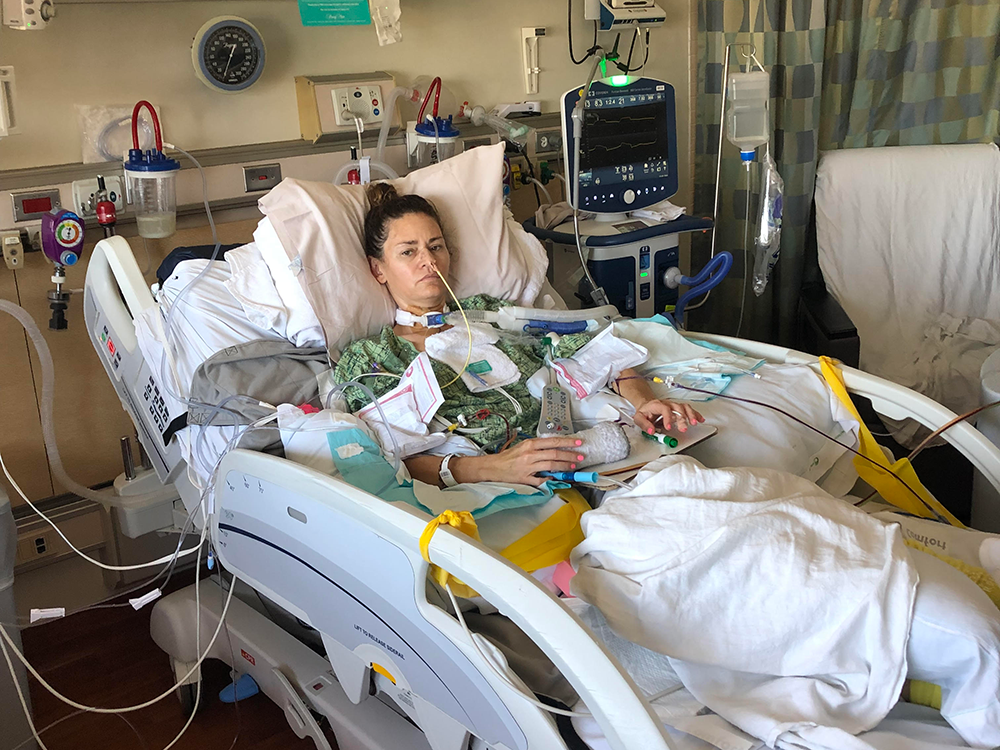
What followed was a crash course in vulnerability for someone who had built her career on communication. Vanessa experienced sudden-onset paralysis that left her unable to swallow or speak. She was admitted into the ICU.
During her months in the ICU, she was intubated, underwent a tracheostomy, and was placed on a respirator for hours at a time. The Speech Pathologist who had treated countless patients with communication disorders now found herself on the receiving end of the very therapies she had prescribed.
In her conversation with Rareatives, Vanessa shares more about her experience being diagnosed with Guillain-Barré syndrome, the importance of educating survivors and healthcare professionals on post-intensive care syndrome (PICS), the journey to recovery, and her memoir Speechless.
The Path to Diagnosis
About three to four months after being admitted to the hospital, an MRI to the brain found lesions to the medulla and pons in the brainstem region.
Just like that, doctors could provide a diagnosis: Guillain-Barré syndrome, a rare neurological disorder in which the body’s immune system mistakenly attacks nerves, causing paralysis.
But Vanessa’s Pharyngeal-Cervical-Brachial variant was even more rare. She shares, “The PCB variant paralyzes muscles of the pharynx, larynx and brachial (arms). It paralyzes all muscles/nerves innervating the muscles for voice and swallowing as well as the muscles used to simply hold my head up. My neck went completely flaccid and I was unable to hold it up vertically without a neck brace.”
A 2020 research study found that “many physicians and neurologists are unfamiliar about pharyngeal-cervical-brachial variant, which is often misdiagnosed as brainstem stroke, myasthenia gravis or botulism.”
Vanessa’s neurologist suggested a recommended care plan of monthly intravenous immunoglobulin (IVIG) infusions. However, this didn’t seem helpful to Vanessa. She explains, “IVIG is a treatment that needs to be administered immediately after initial onset and because my diagnosis came months later, I felt it didn’t do anything. But I continued the treatments because my doctor and husband wanted me to and there was no negative side effects which was important to me.”
Vanessa wanted to take a more natural approach to neurological rehabilitation, stating, “I didn’t want to be on medications or take prescription drugs for pain or depression. So I was on my own to figure out natural treatment modalities that worked for me, my body, and the unique disorder I was dealing with.”
From here, Rareatives will let Vanessa tell you her story directly.
What was the most unexpected challenge you and your family faced during your time in the ICU?
The most difficult process was weaning from the ventilator and learning to talk again. It was physically exhausting and caused me so much anxiety that they had to back off the trials and give me anxiety medications. The frequent suctioning I needed was also a cause for concern by my medical team and caused many temporary setbacks.
But I kept fighting and not giving up. I wanted my life back. I wanted to go back to being a mother. As an SLP, I knew that in order to get better, the patient has to do the work. You can be surrounded by the best medical professionals in the world (which, by the way, I certainly had) but if the patient doesn’t put forth the work, then what good is the medical team? The patient has to put up the fight to heal.
What was the process like from diagnosis through rehabilitation?
Let’s just say I have learned that I am a lot stronger than I ever imagined. Neurological rehabilitation takes time and patience. I was exhausted, sore, in pain, and in sheer terror for well over the first year of recovery as the body and nerves regenerated and healed.
The process was depressing as I had to grieve my former self and come to terms with this new me and where I was in life. I felt like I no longer fit in with the outside working world of young moms raising children. I was now the mom in the ICU trying to learn to walk, talk, and eat food again while my friends were going to work and partaking in birthday parties, play dates, and more. I was the mom confined to bed while her husband helped her shower and tube fed her. It was terribly isolating and depressing as my family ate meals without me. I had to sit on the couch while and wait to be tube fed while everyone else ate at the dinner table.
Can you speak on some of the hidden mental and emotional struggles associated with ICU recovery?
For me it was the invisible disability that I have. Every aspect of my disability (not just my ability to not communicate for approximately 3 weeks) impacted my self confidence. I no longer moved the same, talked the same, ate food the same. This impacted my friendships and socialization immensely, even to this day. I was embarrassed and self conscious of what others were thinking, especially speech pathologists. I was concerned they were talking behind my back. I had to accept it that I was the “elephant in the room.”
More than that, no one can see the PICS (PTSD) and depression/anxiety people in the ICU endure. No one can see the insomnia that I now experience. I rarely sleep through the night without waking with anxiety and reminiscing about my medical experience. Those memories are forever with me.
I equate it to coming back from war. Those images, sounds, experiences are forever ingrained in my memory and they don’t simply go away. Suicide and suicidal ideation are real. We are grateful to be alive and appreciate the medical interventions. But for me, I often wonder if things would be easier had I not lived. Some days were so bad that I wished they would have “pulled the plug” on all medical life saving equipment when in the ICU because my post life was so miserable.
*A Brief Interjection from Rareatives*
Vanessa’s experience left her with post-intensive care syndrome (PICS), which can include new or worsening brain (cognitive), emotional and/or physical symptoms that may persist for weeks or years after leaving the ICU. PICS can lead to anxiety, depression, and post-traumatic stress disorder. Additional PICS characteristics may include:
- Decreased motivation
- Muscle weakness and fatigue
- Decreased mobility
- Insomnia
- Forgetfulness and memory problems
PICS is not just confined to people who have faced serious illnesses, but may also occur in caregivers. Unfortunately, PICS is poorly understood. There is a general lack of awareness among physicians that may delay help for patients and families, but also a lack of standardized care protocols for PICS.
Now back to Vanessa…
As a speech therapist, did you find your professional knowledge helpful or frustrating during your recovery?
Both! I quickly learned that graduate school programs are not properly educating their graduates on PICS, so this was shocking and frustrating for me now that I was a patient in the bed. I also learned that many of the swallowing exercises were futile/waste of time and didn’t change my outcome no matter how many I did. I learned my body was going to heal and nerves regenerate when they want to on their own time and no amount of exercises would change that outcome.
At the same time, my background was helpful because I was able to know what I needed for communication. I knew that there were faster ways of communicating than using things like eye gaze and an alphabet board on a piece of paper. Once I was able to use my fingers, and was more aware, the SLP in me knew if I could only have my phone that I could download a text-to speech app on my phone. This was life changing for my team of medical professionals as I was able to get my words out faster and advocate for my needs faster.
What are your thoughts on improving the way PICS is approached?
I am a big advocate of educating medical professionals, therapists, educators, social workers, family, and critical illness survivors on the effects of PICS as well as PICS – Family.
I am also advocating for more patient ICU diaries to be implemented within the hospital setting to help patients during the recovery phase. So many of us are heavily sedated or in comas that prevent us from remembering details of their medical journey. Having a diary for medical staff to write notes in would help us piece back together the pieces of our story.
What was one moment during your rehabilitation that felt like a genuine turning point in your recovery?
There were a few actually. One was going back to work. I was slowly finding my identity again as a working professional. Another was getting my PEG tube removed. Although that was anxiety-ridden, it was a huge turning point that I could once again eat orally. Another was when I purchased my NEUBIE as that provided my body with the inputs it needed to heal from the neurological issues I was facing. That device gave me hope that I could and would get better. It helped address my nervous in an entirely different way: naturally, which was what I had always wanted.
Before your diagnosis, you helped others regain their speech. How has being on the opposite side changed your understanding of your profession?
I now understand how depressing and isolating the journey is to rehabilitate from a speech and language disorder. Now I am more of a trauma informed therapist, always taking into consideration their mental health before anything. I do believe that if mental health isn’t in a good place, other therapies won’t be effective.
I also understand the importance of community in the journey. These are all areas that are currently not discussed in college and are lacking. Many of my students and patients have been in the ICU or have had significant medical histories causing depression and that needs to be addressed at both the college level, and at discharge from the ICU.
Speaking of community, what kept you resilient and gave you hope?
My daughter, my support group and my prayer warriors. Without these groups of people, I am fairly confident I would have ended my life. I didn’t want my child to grow up motherless. The thought of her not knowing me because she was so young pushed me to get out of bed each day and do my therapies. My care team knew that I wanted nothing more than to get back to my duties as a mother. So they printed pictures of her and decorated the wall in front of my room to remind me what I was fighting for.
My support group provided support and reassurance to me during the most difficult and darkest moments of my life. I could open up to them, be vulnerable and tell them how I was feeling each week on zoom and they assured me I was normal and was not alone in the grieving and healing journey. They reminded me that I wasn’t alone.
My prayer warriors flooded me with cards and daily texts of inspiration and hope. They surrounded me with love and prayers that provided hope and made me feel not so alone in the terrifying medical journey where you often feel “this only happens to me”. They shared stories of their own medical journeys and where they are now in their faith and it gave me hope and that is my intention with my book. If I can give others hope as I have been given then I can find peace in knowing I am helping others.
Tell me more about your memoir. How has writing and sharing your story affected your healing process?
SPEECHLESS is a story of hope, community, perseverance, and the fight for life. Sharing my story, although being vulnerable was terrifying, needed to be done. During my own journey, hearing others’ medical stories offered me such hope and inspiration. I wanted to do that same thing for others. I wanted others to not feel alone.

Once the book finally was completed and launched on Amazon I felt such a relief lifted from my shoulders that I thought to myself, “I wished I did it sooner or could have gotten to the point sooner to write it” because it was gratifying. However, it took five years to write given the emotional toll it took to relieve the memories, review medical records, and face the trauma. I would often write a few pages or paragraphs and walk away from it for weeks, months, or even years. But now, I am on a journey to advocate for all those being affected my PICS and on a mission to educate others working with ICU patients.
What lessons did you take away from your experience?
There are big problems and little problems. Most problems are little and those now roll off my back. I value friendships and community now more than ever. People matter to me, mental health matters to me, trauma and those experiencing any forms of trauma matter to me. Being present with others matters, specifically my child because I never know what tomorrow will bring and I want my time with her to truly matter.
I now want to equip her with the tools to be able to fight back through anything life throws her way and go after what she wants and to never give up. I want to teach her that people matter, lives matter, friendships matter more than anything and to be the person that is willing to go into an ICU room and hold her friend or loved one’s hand while they are scared. I want her to not be afraid as many were with me. It’s changed the way I parent and I focus on her emotional well being a lot of the time. I want her to be kind and compassionate to those with disabilities and those that are “not well”.
Outside of your advocacy, do you have any advice for people or families facing sudden or life-altering diagnoses?
If you are tube fed, try to find ways of making your own. I know it’s time intensive and requires a lot of support from others to help with hits, but providing your body with nourishing foods to heal is so vital. As I mentioned before, find a support group. Surround yourself with community and people that understand you. Give yourself grace and love yourself. You have survived a terrible tragedy – you are a warrior and such an inspiration. Find a NEUBIE practitioner that understands neurological rehabilitation!
For caregivers and families of someone with a rare condition, talk to them! Do NOT leave them in the dark to process the grief alone. So many family members are processing the grief themselves and tend to “not want to bother the patient” or “give them their space” but this is often not always the best strategy because it can exacerbate the depression and isolation. Get the patient involved in a support group and attend counseling with them. Encourage them to get outside (in nature) and back to things that give them hope and a reason to keep living.
Vanessa’s memoir “Speechless: How a Speech Therapist Lost Her Ability to Speak and Her Silent Struggle to Reclaim Her Voice and Life” is available on Amazon. Learn more about her work at www.aneuhealing.com or follow her on Instagram @Speechless_SLP or Facebook. For more information about Post-Intensive Care Syndrome, visit ICU Delirium.
 Rareatives
Leave a comment