

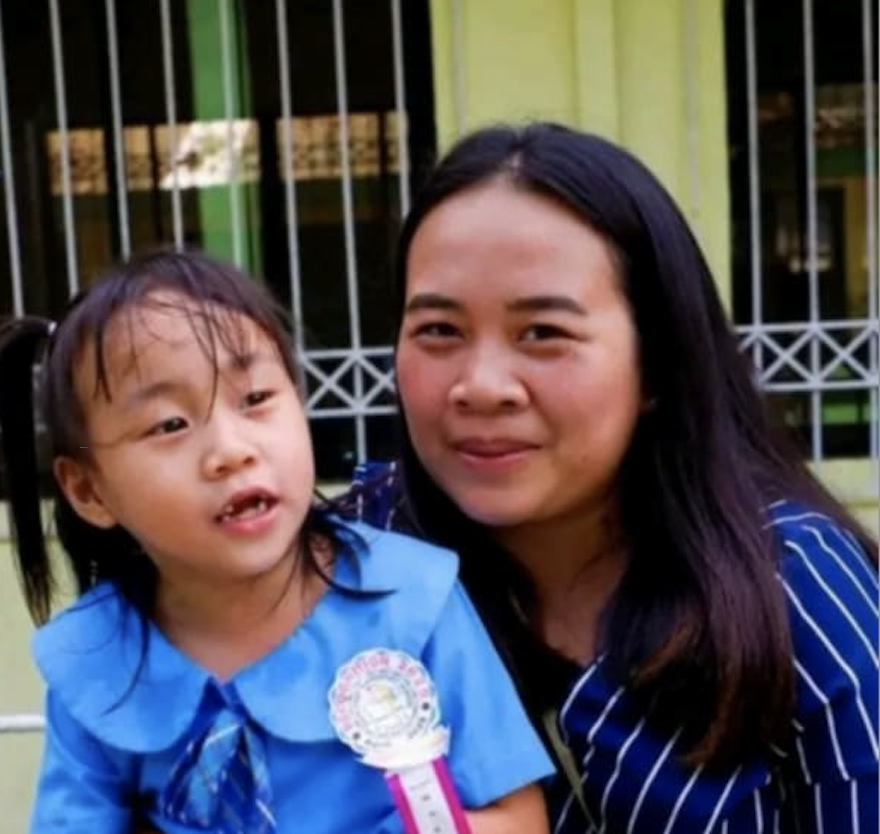
Questions about her daughter Hailie’s health haunted Sirlyn for years. Why, she asked doctor after doctor, were Hailie’s pupils fixed and dilated? Why did she have respiratory infection after respiratory infection for the first six years of her life? And why did no doctor seem to think that there is one cause for these different symptoms?
“That’s just the way she is,” doctors would respond dismissively. But Sirlyn knew better. She had learned to trust her instincts since the first few weeks she had brought Hailie home from the hospital, the same instincts that told her something wasn’t right when her baby struggled to breathe, refused to eat, and grew weaker by the day.
It took ten years to find answers—that’s 3,650 days. 87,600 hours. All tirelessly searching, advocating, and refusing to give up. “It’s not easy,” Sirlyn says. “People always say, ‘oh, you’re so strong.’ I have to be. I don’t have another choice, not when it comes to my daughter.”

Sirlyn and I kept in touch after we met during the 2025 MSMDS Conference, held in Boston by the ACTA2 Alliance, a nonprofit foundation advocating for families with MSMDS and accelerating research into MSMDS. Recently, she sat down with me to speak more about what it’s like to push for answers for ten years, the need for improved research and therapeutic advances, the roadblocks in the medical system, and how to be the best advocate for your loved ones.
Sirlyn and Hailie’s Story
Originally from Estonia, Sirlyn has been living in Ireland for over fifteen years now. When she became pregnant with Hailie, Ireland seemed like a wonderful place to raise her daughter: its lively community, lush greenery, and gorgeous nature.
For all intents and purposes, Sirlyn’s pregnancy with Hailie was unremarkable, exactly what every expectant mother hopes for. Smooth. No complications. No red flags. “No issues until the very end,” Sirlyn explains.
Then, at 39 weeks, Hailie suddenly stopped moving. Sirlyn went to the hospital, where tests showed the baby was in distress. Doctors induced labor, and Hailie entered into the world. Sirlyn immediately fell in love with her beautiful daughter.
Yet, after they returned home following a few days in the hospital, Sirlyn and Hailie’s father’s felt that something wasn’t quite right. “She wasn’t well,” Sirlyn recalls. “She wasn’t feeding and struggled to breathe. I brought her back to the doctor and nurse, but nothing seemed to change.”
When Hailie was just three weeks old, the nurse agreed that her health was deteriorating and called an ambulance to take the infant to the hospital. The nurse originally suspected that Hailie had bronchiolitis, a common viral lung infection which causes swelling and mucus buildup within the small airways (bronchioles) in the lungs.
But the tests showed significantly more worrying findings: “a heart defect, lung disease, pulmonary hypertension, and heart failure,” says Sirlyn. “I was really frightened.”
Concerned about Hailie’s condition, she was admitted into the hospital, where she stayed for the next four months. Although the family was allowed to go home for days at a time, Sirlyn shares how Hailie continued to struggle to feed properly, necessitating longer hospital stays. Their new reality became medical equipment, specialist consultations, and seemingly endless procedures, including open-heart surgery at just four months old.
“Her surgeon mentioned her blood vessels were fragile and something didn’t seem quite right with her heart, so he mentioned there could be a genetic component, though no other doctor thought that at this point,” Sirlyn shares.
Years of Searching
Despite the medical interventions, Hailie’s health did not seem to significantly improve over time. She had a stroke as an infant, though Sirlyn acknowledges that it didn’t have long-term effects. In fact, the family only found out about the stroke through a private MRI after Hailie’s eventual MSMDS diagnosis.
For the first six years of her life, Hailie also experienced serious and repetitive respiratory infections that required hospitalizations “a few times a year or more,” Sirlyn says.
When the infections became less frequent around six years old, Sirlyn allowed herself to hope that perhaps the worst was behind them. That Hailie had turned a corner. She couldn’t have known that the underlying cause of all these problems was still there, hidden in her daughter’s DNA, quietly affecting every smooth muscle cell in her body.
But still, Sirlyn had questions about her daughter’s fixed and dilated pupils, or why Hailie had dealt with so many issues throughout her young life. Like many rare disease parents, Sirlyn became her daughter’s best advocate and primary researcher. She joined Facebook groups for each of Hailie’s diagnoses and Googled symptoms late into the night, cross-referencing medical journals and patient stories.
One night, a search even brought up Multisystemic Smooth Muscle Dysfunction Syndrome (MSMDS), an ultra-rare disease caused by ACTA2 gene mutations. As she read through the various disease manifestations, she couldn’t help but feel like she was reading Hailie’s story. “But I thought it was too rare,” she admits, putting the idea to the side.
When Hailie was seven years old, doctors discovered that Hailie had an aortic dilation, which happens when the aorta (the largest artery in the body) becomes widened. Aortic dilation significantly increases the risk of an aortic aneurysm, which can become life-threatening if it ruptures or dissects.
“The consultant at the time didn’t tell me about it at first. I found out from a new consultant about a year later. We found out that her aorta kept growing, growing, growing,” Sirlyn shares. “And I began to live in fear.”
But finding out about the thoracic aneurysm lit a fire under Sirlyn and she really began to push for more answers. Eventually, she visited a geneticist. And finally, in 2020, ten years after Hailie was born, the whole exome sequencing provided the official diagnosis: MSMDS.
The results brought conflicting emotions of both relief and fury. Relief, because there was finally a name for what was happening to Hailie, an explanation for the decade of symptoms, surgeries, and survival. Fury, because she’d asked the questions, pointed out the patterns, and been dismissed.
“I called, crying, telling doctors they had brushed me off,” Sirlyn says. She felt alone and frustrated after the diagnosis. However, looking back, she does acknowledge that there were some consultants who were more empathetic, which she appreciates, as well as great nurses who still care deeply about Hailie.
But Sirlyn also found herself grappling with what one medical professional told her, that she was “just a mom.” Just a mom. As if a mother’s observation about her child, who she’d watched struggle and fight, counted for nothing in the face of medical degrees and clinical experience. As if Sirlyn’s constant advocacy efforts had been for nothing.
Sirlyn left that conversation behind, but she has never stopped advocating or sharing her expertise—because remember, parents of children with rare diseases are the experts on their child’s condition. The medical system, to best serve patients and families, must remember that lived experience and daily challenges count for a lot more than given credit for.
What is MSMDS?
As described earlier, MSMDS is an ultra-rare vascular disorder. The ACTA2 Alliance explains that there are about 50 known cases of MSMDS worldwide, though, considering the diagnostic challenges, there are likely some undiagnosed individuals.
MSMDS is caused by an ACTA2 gene mutation. According to UMass Chan Medical School, “This mutation is theorized to lead to disrupted actin polymerization, which in turn impairs the ability of smooth muscle cells to contract.”
You can think of smooth muscle as your body’s involuntary worker. Smooth muscle helps blood vessels expand and contract, or helps regulate airflow in the lungs, or affects how your pupils respond to light. Therefore, when smooth muscle is impacted, many bodily systems are thrown off.
The ACTA2 Alliance shares that there are three hallmark signs of MSMDS:
- Patent Ductus Arteriosus or Arteriopulmonary Window: a cardiac defect in which a hole in the aorta, which normally closes after birth, remains open, allowing excess blood to be pumped into the pulmonary arteries
- Congenital Mydriasis: also known as fixed and dilated pupils that don’t restrict when exposed to light
- White matter changes: which are usually visible on brain imagining
However, the clinical manifestations of MSMDS may be broader and more diverse. Additional signs or manifestations of MSMDS can include:
- Chronic lung disease
- An atonic bladder (where someone cannot fully expel urine) leading to frequent UTIs
- Intestinal malrotation
- Gut dysmotility (the abnormal movement of food through the intestines)
- Stroke or Transient Ischemic Attacks (TIAs)
- Increased risk of blood clots
- Inability to self-regulate body temperature
- Gallbladder stones
- Dysautonomia and/or low blood pressure
- Pulmonary arterial hypertension (PAH)
- Aortic aneurysms which can lead to dissections or rupture
Right now, there is no cure for MSMDS. Individuals with MSMDS may be seen by several specialists to mitigate the risks and complications, and many must often undergo surgical interventions.
Finding a Community
For Sirlyn, all of this information emerged through her own research—doctors provided her with no concrete insights or studies. At the time, she felt isolated and alone. “Even though Hailie has always had something rare with the interstitial lung disease, this felt different. I didn’t know where to turn,” Sirlyn says. “And there’s so little information about the condition. I have possibly seen every paper that’s out there.”
As she pored over online research, though, she came across Dr. Dianna Milewicz, a researcher in Texas whose work helped characterize MSMDS as a distinct syndrome. Within just a few days of reaching out to Dr. Milewicz’s team, Sirlyn received a call back—and the isolation that she felt was finally replaced with hope, with community.
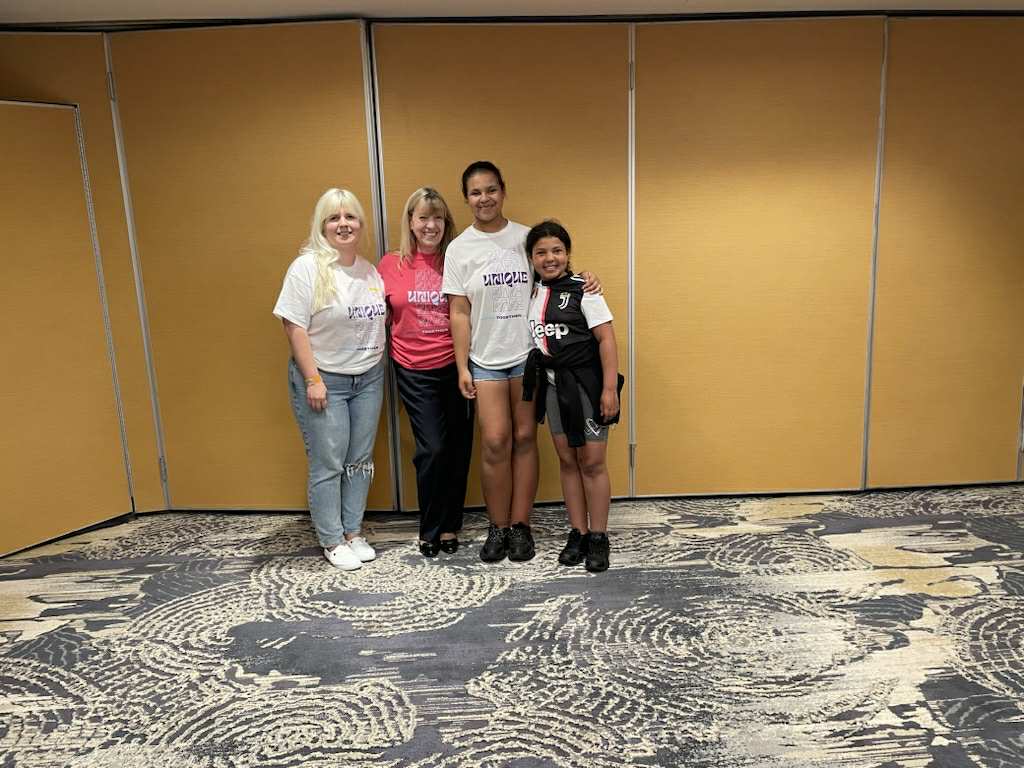
“I got a lot of support from Texas,” she says. “I was in touch with Dr. Milewicz and her team all the time, sending over Hailie’s imaging and getting feedback.”
Then came another lifeline when, on Facebook, Sirlyn came across the ACTA2 Alliance page and MSMDS group. Here were other parents who understood the fear of watching their child’s aorta grow larger. Other families who’d faced the same medical dismissals and diagnostic delays.
“Even though every kid with MSMDS is different—some have more lung issues, some more GI—I can always reach out and know someone understands,” she shares.
Eventually, Sirlyn began volunteering with the ACTA2 Alliance, helping to connect families and build the MSMDS patient registry. Patient registries are important because the data collected can play a role in advancing disease research and understanding, preparing for potential future gene therapies—a recent CRISPR Cas-9 gene-editing approach improved survival in mice models of MSMDS—and supporting clinical guidelines. One such guideline, for example, involves checking the pupils.

“In Hailie’s case, the doctors only realized her pupils were dilated after her surgery and put it down to the post-surgical medication. But fixed, dilated pupils should be concerning and should be something doctors pay attention to,” Sirlyn says. If the ACTA2 Alliance succeeds in their advocacy efforts, future children with MSMDS might be identified earlier, sparing their families years of uncertainty.
Addressing Uncertainty
Although Hailie is under the care of physicians in Texas and Boston, where Dr. Patricia Musolino can be found, there is still some uncertainty with her condition. Hailie underwent her second major surgery last year. “It was only supposed to be a replacement of the ascending aorta near the heart, but she ended up needing a mechanical aortic valve. Now she’s on blood thinners with weekly monitoring,” Sirlyn shares. At the time of the surgery, her aorta was 5.3 cm, at the point where it could have dissected or ruptured.

During the visit to the 2025 MSMDS Conference, Hailie participated in the natural history study, which she’ll also return to Boston to take part in next year. The conference and participation were, Sirlyn describes, “overwhelming, but in a good way. I got to meet all the people I’ve been talking to: the researchers, the doctors, the community.”
The surgery and conference showed Sirlyn how Hailie’s medical team is stepping up to provide the best care to her daughter. Hailie’s consultants in Ireland, including amazing nurses “who are still around after 15 years,” have been significantly more proactive in her care. According to Sirlyn, the team has been actively connecting with Dr. Musolino and Dr. Milewicz, coming up with a plan for Hailie’s continued needs.
Since visiting Boston, Sirlyn also feels empowered. “I feel like I want to do more,” she says. “I feel motivated to make a difference.”
She’s starting at home in Ireland, where Hailie is the only known person living with MSMDS. For Sirlyn, the medical system is not equipped to handle rare diseases, taking years to run important tests that provide a greater understanding of health. She hopes to run a fundraiser in December to advance awareness or, potentially, set up a nonprofit.
In the meantime, Hailie has remained remarkably positive. Of course, Hailie still faces restrictions. No contact sports. No activities that are too intense. But that hasn’t stopped Hailie from living her life to the fullest. As a lover of art, Hailie designed some of the shirts for the 2025 MSMDS Conference. She’s described as a protective older sister, bold and positive and outgoing, and brave beyond measure. With a smile, Sirlyn tells me, “She has her fears, but she’s so much braver than me sometimes. She’s very resilient. That keeps me going, knowing how brave and courageous she is.”

In the coming years, Hailie and Sirlyn will face a new challenge: the transition from pediatric to adult care. It’s nerve-wracking, Sirlyn admits. They’ve been going to the children’s hospital, where at least some of the doctors are starting to understand MSMDS. The future brings more unknowns: how much will care and access change? Will new doctors be willing to learn? Sirlyn is working on building Hailie’s ability to advocate for herself. But it’s a delicate balance, teaching independence while recognizing that managing a complex, multi-system rare disease requires knowledge that takes years to accumulate.
Be an Advocate
When Sirlyn reflects on the last fifteen years, and when she prepares Hailie for her continuing health journey, one lesson stands above all others: advocate fiercely, even when (and especially when!) it’s uncomfortable.
“Be proactive,” Sirlyn says. “It’s not easy to ask questions, but it takes courage to see the doctor and have a list of things you want to know. I think that makes doctors more open to giving feedback. I’m not saying you need to keep them on their toes, but push them to give you answers. Patient care should be at the center of what they do. And as a parent, I want doctors to know: I will always advocate for my child, even if you don’t like it.”
That phrase—“I will always advocate, even if you don’t like it”—reveals the uncomfortable truth about living rare or loving someone who is rare. Sometimes it means being labeled as difficult, demanding, or overly anxious. Sometimes it means having to switch physicians, or travel to find specialists, or feeling the sting of being told that you are “just a mom.”

But being “just a mom” is what helped Sirlyn find answers. It’s what pushed her to recognize something wasn’t right and to trust her instincts. And being “just a mom” is what made every late-night research session and uncomfortable conversation bearable. Because at the end of the day, someone may not be the perfect advocate, know all the right medical terminology, or have connections—but, like Sirlyn, pushing forward and refusing to accept the situation is the best thing you can do for your child.
And just like Sirlyn, who continues to fight for faster diagnoses, for screening guidelines, and for every child in this community, sometimes being “just a mom” is exactly what your child needs.
If you would like to learn more about MSMDS, please visit the ACTA2 Alliance website, Facebook, or Instagram.
 Rareatives
Leave a comment