
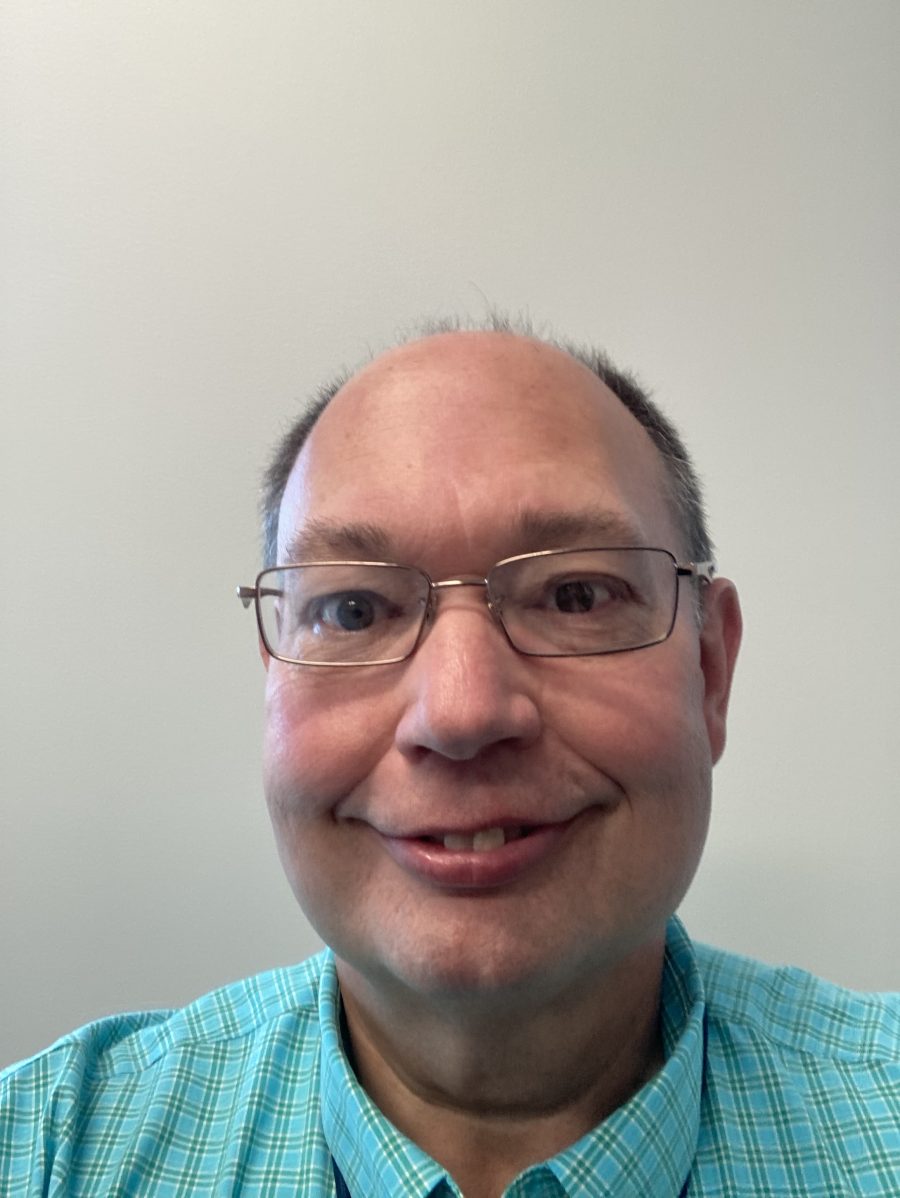
When Todd King tells people he has HSPB8 myopathy, also known as Myofibrillar Myopathy type 13 (MFM13) with Rimmed Vacuoles, he often has to explain not just what the disease is, but that it exists at all. With just three dozen officially diagnosed patients worldwide, and at least eight known gene mutations, his condition occupies a space so rare that most physicians will never encounter it during the course of their career. And researchers and diagnostic tools are lagging far behind, simply because MFM13 is not yet in the public eye.
“We suspect it’s dramatically underdiagnosed because it’s largely adult-onset,” says Todd. “A lot of times, people don’t get diagnosed or can’t get diagnosed. We suspect there are thousands of people living with MFM13 that are just unaware.”
Unfortunately, the lack of awareness and diagnostic availability is common within the rare disease space. The medical system is designed for the masses but not yet prepared to handle lesser-known or newly-emerging conditions. Even more unfortunate, this leaves many individuals with rare conditions with nowhere to turn.
The stakes couldn’t be more personal for Todd. Once an all-state, all-star football player—“I could’ve played D1 football,” he says, “but I went to MIT, which has no athletic scholarships.”—Todd now spends much of his day in a recliner, managing chronic hip pain with ice packs and careful positioning. The progressive muscle weakness which began in 2008 has now transformed into what he bluntly calls “a prison.” Simple activities like going for coffee require extensive planning and coordination with his wife, who has become his primary caregiver, and travel, once routine for the former hedge fund partner, is now daunting. The two no longer travel for fun, only when required, because of the difficult logistics.
But Todd’s story isn’t one of defeat. In fact, it’s just the opposite. Todd, alongside his team at Cure MFM13, a patient-driven charitable project to address the challenges of MFM13, is working to find a treatment for MFM13. In their conversation with Rareatives, Todd and Dr. Ania Kordala, the Program Director at Cure MFM13, discuss the unique challenges of ultra-rare disease advocacy, the frustration of inaccessible genetic data, and why they believe the key to understanding MFM13 is in building their own path forward.
2008: A Defining Year
Todd King grew up in a rural area of north-central Indiana and was an athlete from birth. Still, when the decision came for his future, he chose academics over athletics, turning down Division I football opportunities for the intellectual challenges of Boston. Even decades later, working first at the Federal Reserve in Washington D.C., pursuing an MBA at the University of Chicago, diving into the dot-com boom as a startup co-founder, and eventually meeting his wife, Todd maintained his athletic identity. Working out was how he started his mornings, how he cleared his head.
When his foot started hurting during his runs in 2008, he approached it like he normally would: see a doctor, get treatment, and push through. His podiatrist sent him to a physical therapist, who noticed that Todd had weak dorsiflexion (difficulty lifting the foot).
“I wondered if it was what my uncle had,” Todd says. “He was diagnosed with a muscle condition, but it was never identified what exactly it was.”
Eventually, Todd visited the doctor who had diagnosed his uncle with myopathy (diseases that affect muscles, in which muscle fibers don’t work properly) and received a diagnosis of his own: hereditary distal myopathy. Hereditary means something runs in families and distal means it affects the extremities first.
“It dawned on me that I should’ve expected this, since my uncle had always told me to get my CK/CPK count checked. This is a muscle breakdown test. Mine was always elevated, maybe three times the normal amount, but not extreme like his, which was 50-100 times the normal amount. I figured my levels were related to exercise,” Todd explains.
But learning that he had hereditary distal myopathy still left Todd without a lot of information. He began reaching out to researchers, feeling sure that someone would give him answers. Todd never expected, not beyond his wildest imagination, that finding someone who would listen would take seven years.
Pushing for Answers
Todd began by contacting researchers. Most didn’t respond. Those who did typically offered polite rejections. “They’d say no thank you,” he explains. “I was left with no options on what to do. I had no choice but to keep reaching out.”
He found the same barriers to care and information with doctors. While Todd experienced no medical gaslighting, he also found that doctors were unwilling to engage with him as heavily as he hoped, and nobody seemed motivated to learn what was going on. He shares, “The doctors didn’t try to figure out what it was, and I quickly gave up on that. They wanted to give me medication, but that’s not what I was searching for. I didn’t know about genetic panels at the time, but, looking back, nobody ever mentioned exome sequencing.”
In 2015, Todd finally received an answer from Dr. Virginia Kimonis at UC Irvine. Dr. Kimonis, who spearheads Kimonis Lab, is one of the preeminent researchers studying inherited myopathies in the United States.
At the time, his symptoms had significantly progressed. His physicians had advised him to stop running, with medical guidance telling him not to get fatigued. When he visited Machu Picchu, he could go up and down the ruins but required walking sticks. He also had to wear X-straps to reduce foot drop. While he could still do some tasks—“Doctors would say do ten squats, then say I’m not impacted much. I’d say I’m breathing hard, and they’d tell me yeah, I just did ten squats”—he was not at the level he used to be.
And in 2016, he learned why. He had previously sent his DNA sample for analysis to Ambry Genetics. The results came back without finding anything. But, under Ambry Genetics’ Patient for Life program, his results were continually analyzed as scientific discoveries were made. “They will keep negative results and samples. When new mutations come to be known, they match the phenotype and back-test it,” Todd says. Through this process, Todd discovered that he had a HSPB8 gene mutation.
Although Todd was glad to put a name to what he was experiencing, his diagnostic journey also highlights a clear issue within the rare disease community: difficulties receiving timely care. People with rare diseases typically have to wait for four to five years on average (but often longer) to get a diagnosis, and average around 17 hospitalizations and/or doctors’ visits to reach that juncture.
What is MFM13?
Because muscles are consistently being activated and under stress, our bodies need a way to manage the constant wear and tear. The HSPB8 gene is a component in a critical cellular process called the Chaperone Assisted Selective Autophagy (or CASA) Complex that removes damaged and misfolded proteins, ensuring muscle durability. But when the gene mutates, this process gets disrupted and junk proteins cannot be properly eliminated, causing the cell to die and destroying muscle function. The mutation specifically affects small, thread-like structures in our muscles that help them move.
“What I have is a mutation in one of the two alleles. I create a good, functional, short HSPB8 protein but also a big, long, ugly, gangly HSPB8 protein. Because that messes up the process of autophagy, the misfolded proteins cause the cell to die off. Fatty replacement happens, destroying muscles and their function,” Todd explains.
People with MFM13 experience a range of symptoms and severity. Potential manifestations of MFM13 include:
- Both general and muscle fatigue
- Muscle cramping and stiffness
- Proximal or distal muscle weakness that can spread to other muscle groups
- Muscle atrophy and wasting
MFM13 may progress slowly at first, though this can vary. Todd recalls his own experience with the disease’s progression: “It was nothing at first.” But over the years, it has hijacked both Todd’s and his wife’s lives. He says, “At this point, it’s a really big deal. I have constant hip pain. I use ice, creams, lidocaine patches. I sleep with my head and feet lifted, since my hips hurt worse when flat or down. When I walk, I have foot drop, so I use devices that keep my foot upright. When I sleep, I wear these certain shorts because normal shorts stretch a lot and they don’t really stretch, so I can grab my shorts to pull myself up.”
The adult-onset nature of MFM13 creates its own set of challenges. Unlike genetic conditions that manifest in childhood and prompt early investigation, this condition typically doesn’t cause noticeable symptoms until people are in their 30s or 40s. By then, subtle weakness might be dismissed as normal aging, old sports injuries, or simply being out of shape.
Treating MFM13
The condition’s rarity means, like in 95% of rare diseases, there are no approved treatments, or even experimental treatments in development. As a result, the only available care for MFM13 focuses on symptom management. “It’s a myth that we get specialized care or receive support for disabilities,” Todd says. “I have to fight to make my own care. Families struggle. It’s hard to deal with it. And when you have an invisible condition, they can be really terrible. You’re in constant pain, but people don’t understand what you’re going through.”
This lack of awareness and understanding manifests in what Todd calls the amorphous “they.” People often ask him if he knows when they will have a cure, or question why they aren’t doing more for his hip pain.
“I try to gently let that person know there is no they,” Todd says, “although I sorely wish there was! By that, I mean it’s up to rare disease patients, families, and caregivers to make things happen. Let’s think of it like Harry Potter. Rare disease stakeholders have to cast their own Patronus charm, just like Harry himself did at the lake, because no one is going to cast it for them. It’s scary to fully realize that this is the case, that we’re on our own. But it’s also important to realize. Until we face this reality, people are going to lose precious time waiting for a mythical ‘they’ who will never materialize.”
Creating Space for the Overlooked
Todd was emboldened by his experience with the Kimonis Lab and hurdles navigating the healthcare world with a rare disease. Then, his Strategic Advisor Dr. Karolina Chwalek met Dr. Ania Kordala, a rare disease researcher who holds a Ph.D. in Physiology, Anatomy, and Genetics from Oxford University.
Todd smiles when he recalls how Karolina marched up to him and said, “Todd, you need to start an advocacy organization and bring Ania on.” Much like he now advocates for others not to wait for change, but to create it, he decided to press forward.
Dr. Kordala was excited by the opportunity, especially since she had extensive experience working in the rare disease space. She had completed her PhD while working in the spinal muscular atrophy (SMA) space. “SMA affects one in 10,000 births,” she says. “Compared to Todd’s disease, SMA is much more common. It has three approved therapies, newborn screening, and a large but tight-knit multi-stakeholder community.”
Throughout her career, Dr. Kordala developed extensive experience with patient advocacy through SMA Foundation Poland, where she worked on therapy reimbursement through the healthcare system and integrating SMA into national newborn screening. When she met Todd, Dr. Kordala saw another opportunity to make a difference.
In 2024, Cure MFM13 (formerly Cure HSPB8) was formed. The organization is fiscally sponsored by Social and Environmental Entrepreneurs (SEE), highly supporting the organization’s mission.

As Cure MFM13’s Program Director, Dr. Kordala brings both her technical expertise and advocacy to the organization. Says Dr. Kordala, “Our goal is a life free of burden from MFM13.”
Cure MFM13 offers a wealth of knowledge for patients and families to best cope with the disease, and aggregates important research for clinicians potentially working with affected individuals. In addition to providing information, Cure MFM13 provides a closer sense of community for those with MFM13. The organization runs an extensive website, newsletter, podcast, and social media for the small community of people diagnosed with the rare condition.
“Not every patient is going to be ready to be engaged or may not want to connect. But we want to try and create a welcoming space,” says Dr. Kordala.
Outreach is another key component of Cure MFM13’s mission. Todd hopes to find a provider doing exome sequencing, a form of genetic testing that reads the part of our DNA that encodes proteins, that’s willing to offer broad testing. “I’m really eager to see if we can use this to find more patients,” he says. “I feel like a lot of people would have advice on how to deal with the disease, and we can help each other with our qualities of life.”
If you are a clinician or researcher interested in accelerating diagnostic and curative advancements, reach out to Cure MFM13 to get in touch.
The Challenges of Rare Disease Research
While patient advocacy organizations like Cure MFM13 exist for many rare diseases (such as Cure VCP Disease, founded by Todd’s mentor Nathan), they are often impeded by a lack of data. Or oftentimes, a lack of access to data. Dr. Kordala explains, “One of my biggest frustrations is that there are millions of genomes sitting, waiting to be researched. But it’s basically impossible to get access.” She also adds that because Cure MFM13 and other similar groups are not-for-profit, it’s difficult making a compelling business case for data access.
Funding for advocacy groups is also hard to come by, since research grants usually go to large institutions. “Technically speaking we are not a research organization per se. We outsource all the research and wet lab experiments to our partners. And if we’re not a research organization, it’s nearly impossible to get research funding,” Dr. Kordala says. Larger, more established organizations often have more administrative capacity and proven track records, attracting more funding. Grantors also tend to look for opportunities that will impact the greatest number of people: a fundamental mismatch for groups focused on rare conditions.
“Researchers have their own interests and focuses, and everything else is ancillary. Drug companies want to make money and mitigate risk, so they don’t really want to mess with rare disease patients,” Todd shares. “I told a concierge doctor my diagnosis. He got angry, said he’d never take me as a patient. He focuses on healthy patients, he said, and I’d consume all his time and effort. Finding collaboration to help us together is so rewarding, but it seems the only people who aren’t competitive are advocacy groups.”
Rare disease stakeholders, particularly parents and loved ones, often find themselves leading the research charge: just look at Cure Rare Disease and TCAR RareLabs. But this puts a huge financial pressure on those affected by the disease, rather than on the scientific and medical establishment.
Cure MFM13 Research
Despite the complications, Cure MFM13 is making some headway with research. Says Dr. Kordala, “One of our goals is to uncover the fundamental biology — to truly understand what’s happening in the disease and why.” In addition to providing a grant to the University of Milan to study disease mechanisms, Cure MFM13 has also partnered with the International Institute of Molecular and Cell Biology in Warsaw on developing a mouse model. “In eight months, we can use this to study biology and pathology, and for translational purposes to try ASOs and other potential therapies, such as small molecules,” she adds.
For Todd, understanding autophagy is equally important. He explains that one researcher mentioned the quickest path to treatment is by modulating or upregulating autophagy. “To me, that makes sense,” says Todd, “but autophagy is poorly understood. We’re trying to develop autophagy blood tests for biomarkers and to identify if any interventions work.”
Researchers: Collaborate with Cure MFM13 — together you can accelerate discoveries for MFM13.
Beyond those efforts, Cure MFM13 is also developing a research toolbox including fibroblasts and stem cells (iPSCs) making the methods and resources needed to study MFM13 as widely available as possible. For other advocacy groups who are starting out, Todd and Dr. Kordala have a reminder to push forward.
“Scientists, doctors, and regulators will underestimate you. Be the expert and be prepared,” says Todd.
In the coming years, Todd dreams of getting “a couple hundred more patients identified.” Ania agrees, but adds that if the diagnostic process was streamlined in the first place, it would be easier to identify patients. This presents a classic chicken-and-egg scenario, she notes, “Whenever we talk to panel providers, they say it’s still too rare to be included. But it will stay rare if it’s not included in myopathy panels.”
Todd also knows that successful advocacy demands sustainable engagement, saying, “Hopefully some subset of newly identified patients would want to be engaged and volunteer with the organization in a meaningful way.”
Running a patient advocacy group is not easy, but Todd and Ania’s work is a lifeline for people living rare, and so they keep moving forward: “This is a marathon. You take three steps forward and two steps back. But every patient is a win.”
Interested in understanding MFM13 or connecting with Cure MFM13? Learn more about the condition on Cure MFM13’s website.
You can also connect with Cure MFM13 directly via X (formerly Twitter), LinkedIn, Youtube, and Facebook.
 Rareatives
Leave a comment