
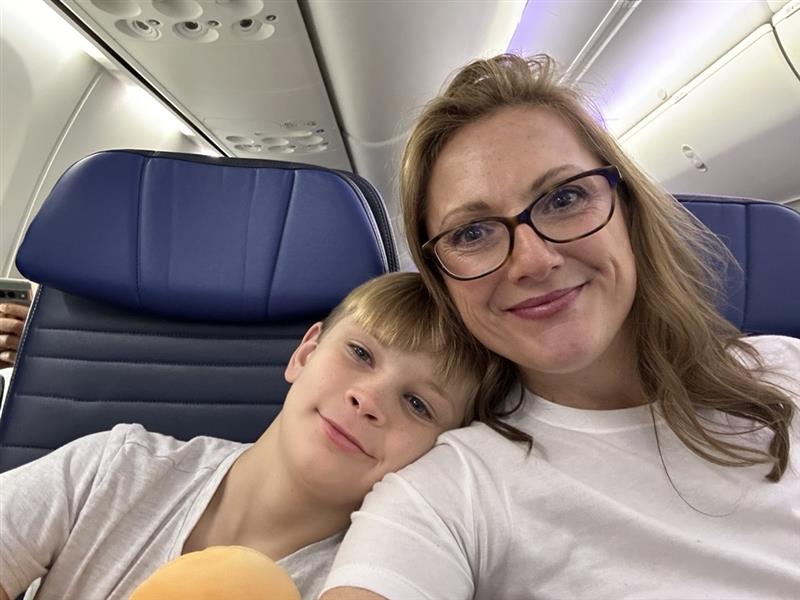
At ten years old, Grant loves hands-on hobbies, especially where he can get his hands dirty. He enjoys being outside in nature, running and climbing and hiking with his family (including his three brothers!). When he’s at home, he’s painting or building intricate structures with kinetic sand. With a laugh, his mom Kristy says, “Anything messy is right up Grant’s alley!”
For Kristy, watching Grant’s creative, exploratory approach to life is both ordinary and extraordinary. She sees what others see when they look at Grant: a young man who loves strategizing over Fortnite, creating elaborate slime experiments, or spending time with friends. But she also carries concerns that others can’t see. Is he showing signs of fatigue? Are his friends’ parents aware of his medication needs?
“Being the caregiver for a child with a rare disease is stressful, and it’s something that never fully leaves your mind,” Kristy explains.
Still, thanks to the lessons she’s learned over ten years of treating Grant’s classic congenital adrenal hyperplasia (CAH), and to the benefits she’s seen from his CRENESSITY (crinecerfont) treatment, Kristy feels more prepared for whatever comes next. She and Grant recently spoke with Rareatives about managing CAH, clinical trial participation, and advice for others within the CAH community—just in time for Rare Disease Month!
The Hospital Phone Call
As far as Kristy could tell, as she stared at her newborn son in the hospital, Grant was a healthy baby. She and her husband were ready to take Grant home, to integrate him into their already beautiful family. So, after being discharged when Grant was three days old, they walked out of the hospital ready to move into the next phase of their life.
Then the phone rang. “I was shocked,” Kristy shares, “when, right after we were discharged, the hospital called and asked us to bring him back immediately for more testing.”
Grant’s newborn screening tests had detected that he had a rare genetic disorder known as classic CAH. According to the Cleveland Clinic, classic CAH affects an estimated 1 in 10,000 to 15,000 people.
Immediately, Kristy’s mind started racing. “My husband and I kept wondering what Grant’s future would look like. Would he be so sick we’d have to keep him home all the time? Would he be able to live fully and happily, like we want for all our children?” Kristy tells me.
These concerns were compounded by the fact that neither Kristy nor her husband had ever heard of CAH before. In the first few days after Grant’s diagnosis, they spent an inordinate amount of time online, researching CAH late into the night to understand what it might mean for their son’s future. Looking back now, Kristy reflects, “It was completely overwhelming.”
It wasn’t until the family connected with an endocrinologist—“after several long days filled with fear and anxiety,” says Kristy—that some of their fears were assuaged. First, the endocrinologist explained what exactly CAH is and how the body responds. At the same time, the endocrinologist reminded the family that each CAH case is unique. Although the endocrinologist could provide guidance throughout the process, “only time could answer some of our questions,” Kristy shares.
What is Congenital Adrenal Hyperplasia (CAH)?
Congenital adrenal hyperplasia refers to a group of rare genetic disorders characterized by enzyme deficiencies which affect the production of adrenal hormones such as cortisol, adrenal androgens, and aldosterone. With one or more hormones underproduced or not produced at all, the body then overproduces another hormone.
In the classic (“classical”) form, Kristy shares, “The enzyme deficiency prevents people with CAH from producing enough cortisol. As a result, the pituitary glands in the brain produce more ACTH. This leads to an overproduction of androgens in the adrenal glands.”
About 95% of all CAH cases are caused by deficiency of 21-hydroxylase, an enzyme. The National Organization for Rare Disorders (NORD) explains:
CAH due to 21-hydroxylase deficiency [can be] broken down further into two subcategories: classical CAH, which can be sub-divided into the salt-losing form or the simple-virilizing form, and non-classical CAH. Classical CAH is by far the more severe form and can result in adrenal crisis and death if not detected and treated. Non-classical CAH is milder and may or may not present symptoms.
As their endocrinologist told the family, each case of CAH is unique and variable—as are the symptoms and manifestations. “Some symptoms are due to low cortisol, while others are due to high ACTH and androgens,” says Kristy. “For Grant, the hormonal imbalance caused noticeable puffiness.”
Symptoms of classic CAH may include:
- Premature signs of puberty
- Rapid growth, with a shorter final height than average
- Atypical genitalia (in females)
- Nausea
- Low appetite
- Weight changes
- Fatigue
- Mood swings
- Dizziness
Children with classic CAH may also experience adrenal crisis, which can be life-threatening, and which may include the following symptoms:
- Severe dehydration
- Vomiting
- Low blood pressure and/or blood sugar
- Diarrhea
- Confusion
- Shock
The Trial That Changes Everything
Kristy and her husband were concerned about the bloodwork results they saw every time they took Grant to the endocrinologist. As she explains, “Every single time, his numbers were always high. His bone age was significantly higher than his age and he was prepubescent at seven years old, which our doctor said was due to his elevated androgens. It felt like we were chasing numbers rather than treating this proactively.”
The issue? Treatment development for rare diseases has been historically slow, thanks to dispersed patient populations, a poor understanding of rare conditions, and funding challenges. As a result, people within the CAH community had few treatment options beyond daily steroid replacement. However, daily steroid replacement has its own challenges. What the C@H?!, developed by Neurocrine Biosciences, explains that “higher doses of steroids come with side effects” such as obesity, reduced bone mass, and difficulty sleeping (among others) “and may not manage excess androgens well enough.” Further, high doses of daily steroids could lead to medication-induced Cushing’s disease.
Amplifying awareness of treatment issues in the rare disease community is incredibly important because people with rare conditions, and their families, deserve access to affordable, equitable, health-preserving treatments. By highlighting the needs within these communities, we can begin pushing the medical system forward to develop new treatments.
Like CRENESSITY (crinecerfont), which Grant has been taking since he joined a clinical study in 2022. When Kristy first received a letter through MyChart inviting Grant to participate in the study, which was evaluating crinecerfont in children ages 4-17 with classic CAH, she says, “I thought it was spam, since there were no other drugs for people with this condition.”
But when she brought the study up to her endocrinologist during her next appointment, he not only confirmed that it was real—but that Grant would be a fantastic candidate for inclusion. “The endocrinologist said it was a fantastic time to be trying something like this,” Kristy shares. “Hearing her confidence gave us the reassurance we needed, and we decided to move forward with participating in the clinical trial.”
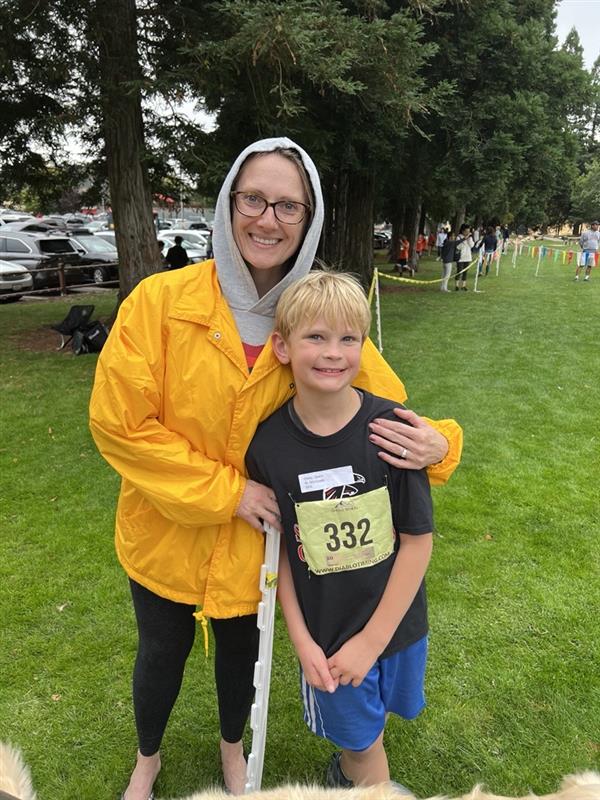
When asked how he felt about joining the clinical study, Grant thinks for a moment before responding. He says, “I was worried but also excited to join because my parents and doctor thought that it would make me feel better.”
And it did.
CRENESSITY and its Eventual Approval
Grant joined the trial and began taking crinecerfont, which involved a bit of a learning curve. The therapy, a twice-daily medication that targets a key connection in the body’s androgen-making process, comes in a gel capsule (although it is also available as an oral solution). Grant had not been used to swallowing pills.
“We practiced by starting with Tic Tacs,” Kristy says. “From there, we moved on to M&M’s and eventually Mike and Ikes. The funny part was that all of his brothers wanted to learn how to swallow pills too—just so they could get the candy!”
As the trial progressed, Kristy saw incredible changes in her son’s health. He had more energy. His puffiness disappeared. Suddenly, he was taking advantage of more of what life had to offer him. As Grant told me, “If you take the right medication, you can still do all the fun stuff you like. For me, I still get to paint, make slime, and have sleepovers with my friends, which is awesome.”
The outcome of the trial was also life-changing in many ways for others within the CAH community. In December 2024, two years after Grant began taking the therapy, the U.S. Food and Drug Administration (FDA) approved CRENESSITY for adults and pediatric patients (ages four and older) with classic CAH, creating a pathway to better care.
For other parents who are exploring CRENESSITY as a potential treatment for their children with classic CAH, Kristy urges you to speak to your doctor, saying, “You have nothing to lose. It made a remarkable difference for Grant and my family. While Grant’s journey is unique and others may have different experiences, I strongly encourage you to speak with your healthcare provider about whether CRENESSITY could be an option.”
Through finding this treatment option, Kristy feels like her family has become more stable—and that she has more peace of mind. More than that, she’s proud that her son helped advance the first CAH treatment in seven decades, and “truly grateful and excited to be living in a time where real options exist for people with classic CAH.”
Kristy’s Advice to Families
Parenting a child with a rare disease undoubtedly comes with challenges, many of which can feel overwhelming at times. But Kristy poignantly reminds families that leaning into the anxieties or the heavy feelings can add an extra burden on what you’re dealing with. She shares, “Grant’s diagnosis is something that’s always in the back of my mind, just as it is for any parent raising a child with a rare disease. But I’ve learned that if you let fear take over, you’ll never truly get to live. That’s why I encourage you to embrace life fully, despite the challenges.”
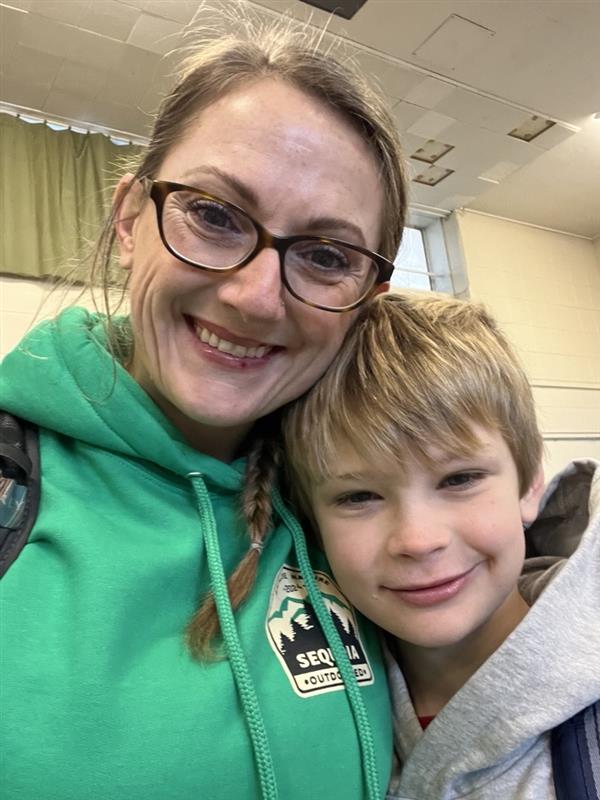
For Kristy, finding a routine—and a care team she trusts—has been incredibly helpful. She’s built a strong relationship with Grant’s endocrinologist and healthcare team, which makes her more comfortable in asking questions openly and engaging in honest conversations. At home, she also parents Grant very similarly to her other sons, something that not everybody understands.
“A common misconception is that parenting a child with a rare condition is entirely different from raising children without one,” she says. “While it can be hard to establish a routine, once you find your rhythm, it becomes second nature. I parent Grant the same way I do my other three boys. The only difference is that we’re mindful of his medication, his school is aware, and I make sure his friends’ parents are fully informed. Over time, you’ll discover what works for your family.”
With a smile, she adds, “That doesn’t mean your challenges will disappear. But it does mean you’ll find strength along the way. Remember—you’ve got this.”
If your child has been diagnosed with congenital adrenal hyperplasia, consider reaching out to the CARES Foundation for community and resources.
If you’d like to learn more about CRENESSITY, you may do so here.




 Rareatives
Leave a comment