

Sammy was in a group therapy session when another participant looked at her cane, used for Sammy’s occasional knee issues, and said plainly, “You’re not disabled. You walked through that door just fine.”
Some days Sammy needs the cane. Other days she doesn’t. People, she tells me, often feel like they have the right to demand answers about her physical conditions. Frustratingly, the comment wasn’t unusual to Sammy, just a more direct version of comments about her health or body that she’s been hearing her entire life.
It took Sammy until adulthood to finally get names for the three conditions she was experiencing, despite experiencing symptoms for many years. And none of the diagnostic processes were simple. Instead, Sammy had to fight to be heard, and was still frequently misread by physicians.
Now Sammy has chosen to share her story, both to raise awareness of her conditions and to reduce the broader stigma associated with DID. In her interview with Rareatives, Sammy traces the years it took to get answers and what she wants others to understand.
Growing Up Undiagnosed
Sammy and I have actually known each other since childhood, though it’s only during our interview that I gain a fuller picture of what she was navigating at the time. Sitting in elementary school at seven years old, she was dealing with sometimes debilitating stomach cramps.
“I called them stomach attacks,” she explains, “since they were much more than just cramps. I’d suddenly be hit with waves of nausea and pain. It felt like my stomach was trying to kill me. I’d spend hours in the nurse’s bathroom until everything passed.”
Although the nurse would evaluate her for stomach bugs, nothing was ever found. Sammy acknowledges that she wasn’t able to visit a doctor for the issue at the time, so she learned to endure the pain, week after week.
At the same time, there were other shifts in her physical health. When she was in class, Sammy’s muscles and joints would lock up. She recalls having to pull on her fingers to loosen them enough to write. Unfortunately, her teachers were less than understanding. Once, Sammy was given a four-page paper to write. But when she tried to put words to the page, “I couldn’t get my hands to move,” she says. Her teacher made her stay inside during recess until she could get the paper fully written. Sammy got through it by popping her joints.
By age ten, Sammy had also stopped growing entirely—her feet remain, to this day, a size 2.5—despite everyone around her getting taller. The pediatrician noticed that Sammy was smaller than her age. But she brushed it off, mentioning to Sammy’s mom that Sammy was just petite. Says Sammy, “Her growth chart was messed up. She kept telling my mom I would likely have a big growth spurt at some point. But she never tracked on my notes that I was too short for my age.”
Rather than receive support or intervention, such as growth hormone (GH) treatment, Sammy was left to do what she’d find herself doing her entire life: pushing for answers and trying to move forward in a system that seemed uninterested in helping.
The First Signs of DID
In challenging times, from elementary to high school, Sammy found herself leaning on an interesting source, explaining, “I had back-and-forth conversations in my head with people. When they would talk to me, it would be telepathic. They were safe, my friends. But the connection [to DID] never really stuck.”
The people Sammy spoke with were always friendly and welcoming, never scary. Yet had Sammy shared this, people may have unfairly judged her. Mental health is, unfortunately, highly stigmatized in today’s world, with certain conditions receiving more backlash than others. A 2023 study published in the Journal of Trauma & Dissociation found that schizophrenia or dissociative identity disorder tend to have a more negative social stigma than depressive conditions. However, this stigma can make it more difficult for people to share their experiences, seek support when needed, or educate others on what living with these conditions is truly like.
Still, while visiting a psychiatrist in eighth grade, Sammy vividly remains one of the voices instructing her, from the back of her mind, to “tell him about us.” But when she mentioned that she had friends that lived in her head, the psychiatrist brushed it off. “He was more concerned that I was talking to the fish in his office’s fish tank,” she says.
By the time Sammy began visiting specialists in college, she had been looking to connect what she was experiencing with actual diagnoses for over a decade.
The Road to Answers
At nineteen years old, Sammy found herself at Cooper University Hospital, intent on finally solving her years-long battle with stomach pain. Enough was enough. She began with a physician who ran a slew of tests which discovered that Sammy had a fatty liver. But rather than unpack the potential reasonings behind why this might occur, the doctor wrote it off as an alcohol problem.
To Sammy, that wasn’t good enough, so she left her doctor and began seeing a new one. Here, she was finally given the first in a series of answers to come: hemochromatosis. Typically caused by HFE gene mutations, hemochromatosis is a disorder in which too much iron builds up in the body. This can lead to issues with the liver, pancreas, skin, heart, pituitary glands, and joints. Sammy now manages her condition with a hematologist.
But learning about the hemochromatosis spurred her continued searching. Between ages nineteen and twenty-three, Sammy went through an entire slew of experts. She worked directly with the hospital’s GI department, who ordered a defining test: a nuclear medicine gastric emptying test.
“I ate a small breakfast of radioactive eggs before being monitored. Two hours later, 0% of my stomach had moved,” she explains. Doctors diagnosed her with a chronic condition called gastroparesis, providing her with medication to help manage associated issues like GERD.
Says Sammy, “Usually people have more problems like weight loss or vomiting. I don’t seem to have that. I just have the pain level.” However, the absence of those more recognizable symptoms is part of what made the gastroparesis so hard to identify—and part of what makes people like Sammy feel dismissed when describing what they’re going through.
An Even Rarer Diagnosis
Sammy also began seeing a geneticist and orthopedist. This was sparked, she explains, by the fact that “my fingers are different sizes, and I don’t have the standard spacing between fingers and toes. At one point, my orthopedist said I had brachydactyly, which is a sign of genetic disorders, but then we had to figure out which one. I just wanted an answer to what I’d been dealing with.”
The tests were expensive; genetic testing can be costly on its own, and getting the right genetic and blood tests sent out to California for review required a grant from the hospital. But, it turns out, these were exactly what Sammy needed to receive a diagnosis: pseudopseudohypoparathyroidism, a form of Albright hereditary osteodystrophy (AHO).
Pseudopseudohypoparathyroidism (PPHP) is a rare genetic disorder resulting from GNAS gene mutations. Although it shares symptoms and manifestations with Albright hereditary osteodystrophy (also known as PHP-1), people with PPHP are not resistant to parathyroid hormone (PTH), while people with PHP-1 are resistant to PTH. Essentially, people with PHP-1 do not adequately process PTH. People with PPHP can process PTH, but still display physical symptoms.
“Essentially, this means I have no thyroid or parathyroid problems,” Sammy explains to me. “Most people with AHO have bad thyroid problems. My geneticist told me I am infinitely lucky because parathyroid breakdown is horrible.”
Not every person with PPHP shows the same characteristics or manifestations. Potential characteristics may include:
- Muscle spasms and/or cramps
- Weakened tooth enamel
- Teeth that grow in later than expected
- Brachydactyly
- Short stature
- Ectopic ossifications of soft-tissues (bony formations in the soft tissue), which may cause pain
- A rounded face
Currently, treatments for PPHP include monitoring and symptom management. Sammy sees an endocrinologist and has started working on strength training in the gym to reduce muscle tension. She also purchased new functional footwear from Germany designed with almost no arch. Instead, the support is built into the inner side of the shoes to stabilize her feet and calves.
Additional Considerations
Because of Sammy’s shorter stature, she has sometimes found tasks like driving to be more difficult. It was often hard to find a dashboard she could see over or pedals she could reach easily. Driving was also made tougher because of overmyelination of the optic nerve, sometimes known as myelinated retinal nerve fibers (MRNF).
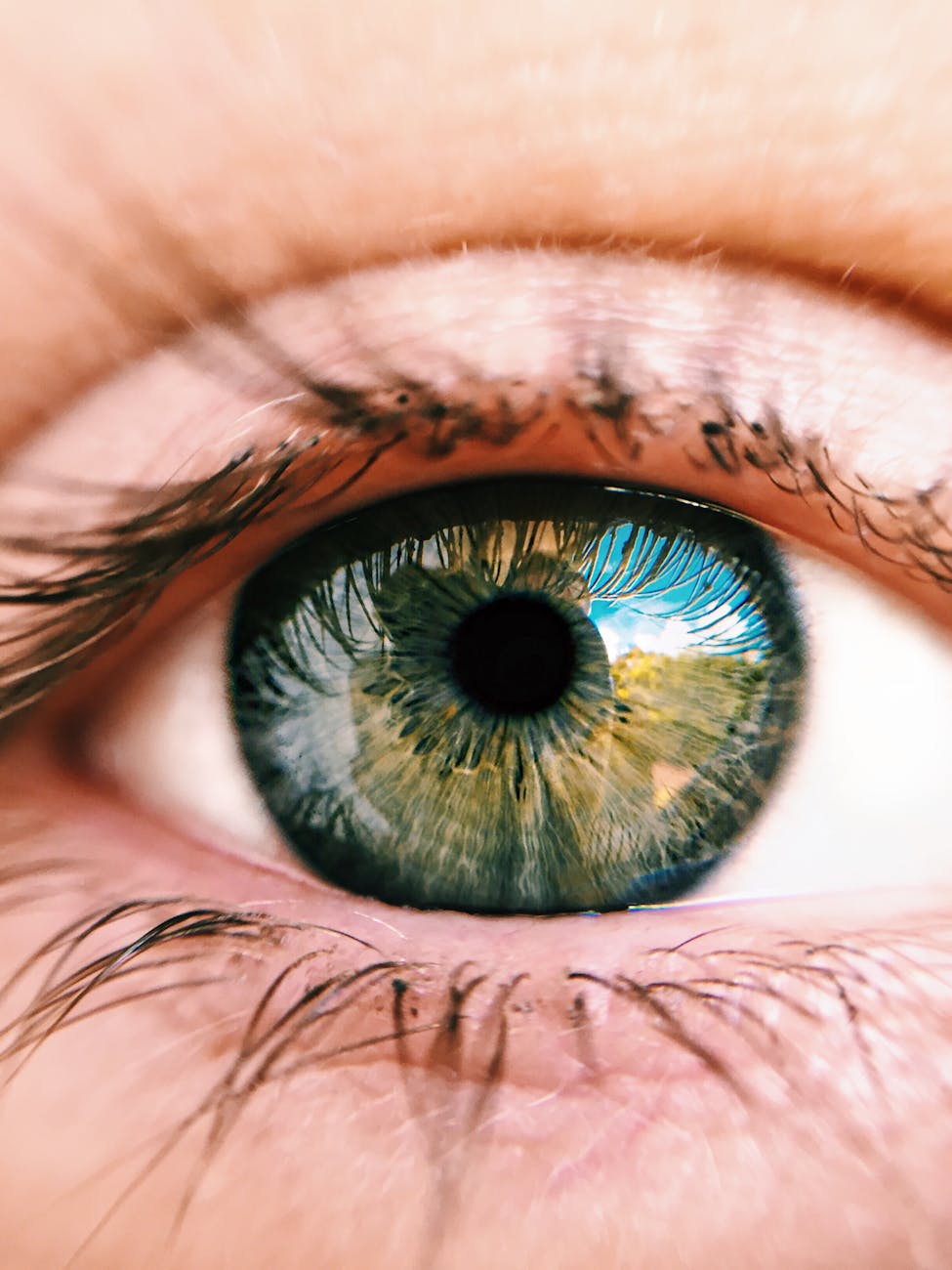
Sammy has been dealing with overmyelination of the optic nerve since birth. “It means I have little to no peripheral vision or depth perception,” she explains. “It makes merging lanes very risky. We”—Sammy sometimes uses ‘we’ when referring to her system, which you’ll learn about shortly—“gave up driving and are grateful we never hurt anyone.”
Her experiences exemplify the many hardships that people with rare conditions face. A lack of understanding about one or multiple conditions often compounds into confusion and diagnostic delays. Still, Sammy does her best to move forward, even as doctors are exploring whether her ongoing nerve and muscle issues, like dystonia, could potentially be related to her PPHP or to a separate neuromuscular issue.
Breaking the Stigma: Dissociative Identity Disorder
Throughout her mission to find answers elsewhere, Sammy was also navigating the heavy and uncertain landscape of trauma, which manifested physically, mentally, and emotionally. In college, she developed bipolar disorder with manic psychosis. At one point, while in a care program, she was also misdiagnosed with borderline personality disorder. “It’s hard,” she says, “because borderline can have similar symptoms to PTSD/CPTSD, and I knew what they were seeing was more trauma-related.”
By this point, she was pretty certain that she had DID. “My system, which is lingo for you and your alters, was able to talk to me,” she shares. Her system had been trying to communicate with her since she was a child. But she needed a psychiatrist who didn’t look at her like she was making it up. A psychiatrist or therapist she could trust. She found that in a partial care program, which is when Sammy began exploring her system in more depth.
What is DID?
Before we dive into Sammy’s experience, let’s first lay out what dissociative identity disorder is, especially because many people have misconceptions and stereotypes about what this disorder entails.
Dissociative identity disorder is a complex psychiatric condition which “usually occurs in people who experienced severe, persistent, or overwhelming stress or trauma during childhood.” According to a 2023 book chapter, DID occurs in approximately 1.5% of the global population. However, people often misunderstand DID because people with this condition are often excluded from clinical trials and epidemiological studies, which perpetuates under-recognition and leaves significant gaps in evidence-based care. DID is also less researched and more poorly understood than other mental health conditions, meaning it has often been reduced to caricature in popular culture.
People with DID may experience memory loss or gaps in their memory, distorted bodily views, a sense of detachment from certain emotions, or feeling like you’re not yourself. There was one year, Sammy shares, where she experienced another trauma disorder in tandem, called depersonalization and derealization, which can affect your perception of yourself or your environment. “I was doing a neighborhood walk, got to my street, and couldn’t figure out where my house was,” she says. “I knew where it was theoretically, but had to walk in circles until I could get my brain to respond.”
Psychotherapy, with the long-term integration of identities (if and when possible), is usually considered the best treatment approach for DID. However, more research could be done to know how better to support individuals living with DID.
Learning the System
People with DID live with two or more separate identities. The other identities in the system are known as alters. In Sammy’s case, she explains that she has ten alters, split down the middle in terms of biological sex and gender.
“Nobody in my system has a role,” she says. “In other systems, some alters may develop where certain people will take on a ‘job.’ A boy may feel like a protector, and whenever the host is in a dangerous situation, that protector comes to the surface. Some systems have alters who can restrict memories, or persecutor alters who were never able to deal with violent or scared feelings so they lash out at the group. They may move into self-harm, including drugs and alcohol. In those cases, the other alters might turn on that alter and say, ‘You need to cut it out.’”
Sammy explains that dissociation is not as much about the alters themselves, but about how the person in front (the host) can handle emotions. “If the person in front can’t deal with any nasty emotions, they switch out and go to the subconscious. Someone who can handle the trauma comes up instead,” says Sammy. “In my system, we don’t split very often.”
Then, with a laugh, she shares a story of how there was once a switch because one of her alters, Victoria, wanted a bread pudding Sammy had ordered. “I was gone for four minutes, came back, and my food was gone,” she says.
Her alters—Phantom, Leah, Jack, and others—have distinct personalities and different ages. Sammy is a “middle,” which means she is developmentally younger than her physical age, noting, “I’m currently at age thirteen, which means I talk and think like a teenager, and sometimes have trouble managing things.” She’s learned to mask when needed. But if she encounters a situation she can’t manage, one of her older and stronger alters will move in. Some of her other alters are “littles,” or alters under age six.
When asked what type of research she’d like to see done into dissociative identity disorder, Sammy notes that the age regression many people experience is under-explored and not heavily covered in medical literature.
Psychogenic Non-Epileptic Seizures
In situations of extreme stress, Sammy found herself seizing up. Sometimes she would call the ambulance. But by the time EMS arrived, the seizures had stopped. Sammy pursued EEGs, but the results always came back inconclusive.
In an effort to firmly establish what was going on, Sammy stayed overnight at a hospital for a sleep-derived study, where doctors told her to stay up for 24 hours before her appointment.
“But there were flashing lights during the test, and I immediately started thrashing around even though I was conscious,” she shares. “They had to stop the test, since it fell under the doctor’s mission of not forcing the patient to be subjected to too much avoidable pain.”
Her doctor soon diagnosed Sammy with psychogenic non-epileptic seizures (PNES), a poorly-understood disorder with physical symptoms that mirror epileptic seizures. According to the Epilepsy Foundation, an estimated 20-30% of people seen at epilepsy centers for drug-resistant seizures actually have PNES.
Unlike epileptic seizures, which occur due to electrical signals in the brain, PNES originates from psychological distress. Studies have found that people with PNES have a 15-40% higher rate of past trauma compared to control groups, with childhood trauma being an especially prevalent cause.
Treatment normally includes therapy, as well as stress reduction measures. “If your life changes and your stress is better, the issues will usually resolve in some form,” says Sammy. “It’s something I’m working towards day by day.”
Addressing Myths and Misconceptions Around DID
One of the enormous stereotypes around conditions like dissociative identity disorder is that the people who live with these conditions are dangerous or harmful. In a 2021 article written for the National Alliance on Mental Illness (NAMI), Shirley J. Davis details her experience living with DID, writing:
“Thanks to dramatized media depictions of DID, simply hearing the name of my condition may conjure images of brokenness, violence and terror…The message we receive from movie depictions of DID, however, suggests that I am someone to be feared. In the movie “Split,” a person living with a DID diagnosis imprisons, kills and eats three women. He even has an alter named “The Beast” that commits a variety of violent crimes. By contrast, I never have, nor will I ever, harm another person purposefully. I am not dangerous in the least. I’m simply a human being whose brain protected me so that I could survive.”
Sammy agrees with this sentiment. Alters don’t just go out into the world intent on hurting others. “The alters stay in that person’s head, like VR goggles,” she says. “It’s nonsense that people think someone with DID is going to be a serial killer. The truth is that people with DID are at a higher risk of physical violence from others, largely because of insecurity or being people pleasers.”
She’s not incorrect. A 2017 study on dissociative disorders found the six-month incidence of criminality to be low, with just 0.6% of participants incarcerated. Alternately, a 2022 study in the Delaware Journal of Public Health found:
Dissociative symptoms are also strongly linked to higher rates of revictimization, including sexual assault and intimate partner violence…Although dissociation is adaptive and protective in the face of inescapable trauma, persistent use of dissociation often interferes with the individual’s ability to process cues of danger and discern threatening from non-threatening information by keeping this information outside of awareness.
As such, rather than stigmatizing and stereotyping someone who is handling trauma in the best way they know how, we should be sharing verified, accurate information on DID—and amplifying the stories and experiences of individuals with DID—to ensure more safety and understanding across the board.
If you’d like to learn more about gastroparesis, AHO, or DID, or are searching for support, the following resources may be helpful:
- Albright Hereditary Osteodystrophy: NORD – AHO
- Gastroparesis: Gastroparesis Patient Association for Cures and Treatments (G-PACT)
- Dissociative Identity Disorder: ISSTD – International Society for the Study of Trauma and Dissociation
- PNES: Epilepsy Foundation – Psychogenic Nonepileptic Seizures


 Rareatives
Leave a comment