

The medical records stretch across Ginger Hermes’ kitchen table in East Tennessee, a multi-inch-thick chronicle of years of medical history. Inside these records are test results from specialists across state lines, documentation of severe drug reactions, genetic analyses, and multiple diagnoses. There are notes about her Huntington’s disease, her rare form of leukemia, and a blood disorder so uncommon that doctors often have to look it up.
“I should just ship you a box,” Ginger tells new doctors now when they ask for her medical history. The joke masks a serious problem in our healthcare system: doctors rarely read the full file, or understand the person behind the file. Each specialist sees only their piece of the puzzle: the oncologist focuses on Ginger’s leukemia, the hematologist on her rare blood disorder.
It often feels to Ginger like nobody tries to connect the dots between her conditions — but she’s learned the hard way that these connections genuinely matter. This fragmented care nearly killed her. During a nuclear stress test — Ginger’s a heart patient as well — Ginger underwent a medical emergency. None of the doctors had checked how the imaging medication would interact with her tyrosine kinase inhibitor (TKI), a treatment for her leukemia.
“All of a sudden, I couldn’t breathe,” Ginger recalls, her voice tightening. “It took me a minute to get the nurses’ attention before they jumped into action. They had to give me medication to flush the imaging meds through my system.”
But that triggered another crisis: “I had a reaction to that, too. My tongue swelled up, itched, burned. It was awful. I have a lot of problems with drug interactions and what I can or can’t take. Sometimes in emergency situations they don’t check that — and sometimes in the best situations, they don’t check either.”
This problem is systemic. There exists little coordination between primary care physicians and specialists. When communication does exist, information often gets lost between offices. For people like Ginger in the rare disease community, fighting to be heard is nothing less than frustrating.
Ginger’s Story
Life was different in Reno, NV, where Ginger lived for over twenty years. Before her symptoms began, before the endless medical appointments began, she lived a relatively normal life. Reflecting on it now, she says, “My goal is to go back to Reno. It’s a healthier environment — less inflammation and allergens. I seem to do better in the desert.”
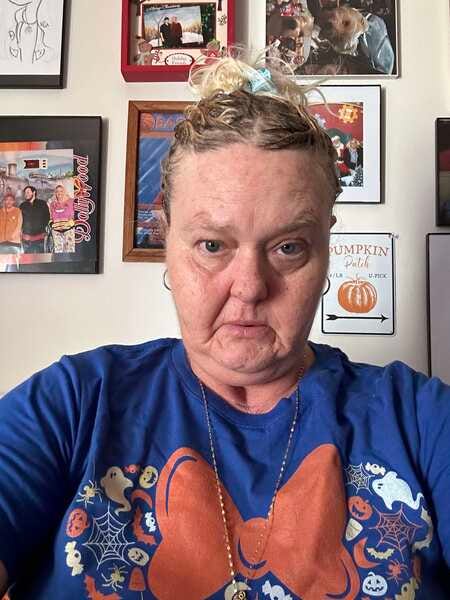
The first signs of her rare condition were subtle. She had some memory loss here and there, then impaired movement. Then her symptoms became more pronounced. Ginger began visiting doctor after doctor, running test after test, just to find answers.
“I felt, and still feel like this, that I was telling them clearly how I was feeling and they were just brushing it off,” Ginger tells me. “I’m also diabetic, so the first thing doctors did was just blame it on my sugar levels. I’d tell them — ‘I’m not here for diabetes-related issues. Are you actually listening to what I’m saying?’ But that was the go-to. And if they couldn’t blame it on my diabetes, it’s like they had to say I was crazy or a hypochondriac.”
With a sigh, she adds, “Getting healthcare professionals to understand takes some work. When someone is going downhill at a relatively fast rate, that should be enough for doctors to listen. But I’ve found that most don’t.”
The medical appointments multiplied. Each visit brought new theories, but no answers. “Most patients don’t know where to turn when they have rare or chronic conditions,” Ginger says. “It’s very confusing. I’ve never been so disappointed in our healthcare system.”
Navigating the Complexities of Diagnosis
The breakthrough finally came when lab work identified that Ginger had several CAG repeats, associated with Huntington’s disease. Huntington’s disease is a rare genetic disorder that causes the death and degeneration of nerve cells (neurons) in the brain. Finally, Ginger had some answers. But this diagnosis was just the beginning.
Beyond Huntington’s disease, Ginger has also been diagnosed with paroxysmal nocturnal hemoglobinuria — a rare acquired blood disorder — and chronic myeloid leukemia (CML) with an unusual twist. Ginger carries the P190 mutation for CML, rather than the more common P210 variant. This mutation typically appears in acute CML, rather than chronic CML, making her condition particularly difficult to treat.
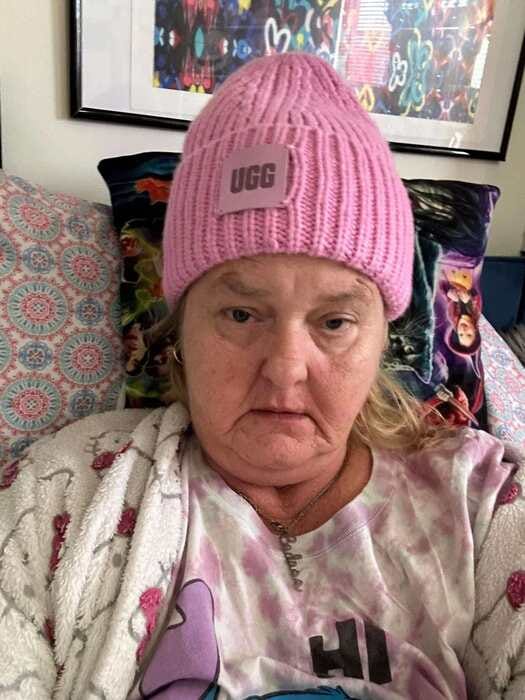
She shares, “Both PNH and CML affect my bone marrow, which is already challenging. But I’m also almost completely TKI-resistant. Everything about my experience has been difficult, complicated, and never an easy fix.”
These conditions, as Ginger has learned, don’t exist in isolation. They interact, complicate treatments, and add complexity to her care. Ginger notes, “There’s not many people who are researching my diagnoses — not that I could locate, anyways.” This gap in research has direct consequences for her treatment options, showing how traditional treatment protocols can fail people living with multiple rare conditions.
Ginger actively seeks to connect with any researchers who are studying Huntington’s disease, CML (especially P190 mutations), or PNH. She hopes that her unique case might advance an understanding of these conditions and how they interact. If you are interested in studying one or multiple of these conditions, please reach out at rareatives@gmail.com and we would be happy to facilitate that connection.
A Daily Struggle with Multiple Rare Conditions
Another challenging aspect of living with multiple rare conditions is that no day is the same. Ginger explains, “I feel like I have flare-type reactions almost weekly. Especially with weather changes. I’ve found that the humidity here causes so many problems for me.”
The physical (and mental!) tolls of these flares are relentless. “I’m having trouble walking right now,” Ginger says, “and trouble holding things in my hand, or picking things up. My memory lately is gone. I walk into a room and forget why I’m in there. It gets scary after a while, and the last few weeks have been scarier than usual. I’m struggling with balance and sometimes I can’t remember how to form a word. I’m exhausted, dealing with constant pain everywhere. I am to the point where I feel like my skin and face is burning from the inside out.”
Ginger is currently pursuing testing for an autoimmune condition after developing a bright red rash on her cheeks, as well as positive ANA tests. Her vision has become another serious concern. After losing sight in her left eye — what Ginger describes as “a black curtain over my face” — doctors discovered “a good-sized hemorrhage.” While they treated her with multiple injections of Avastin, surgery might be necessary if the blood doesn’t clear. This can make living positively tough: “It seems the worse things get the worse you feel. The more short-tempered you become and less tolerance for ignorance or rudeness.”
Life with multiple rare conditions also makes it difficult to fully appreciate the ‘good days’ where pain and symptoms are minimal. Says Ginger, “My mistake is when I start to feel pain-free and then think about everything I need to do now. And that leads to being in more pain and feeling more exhausted.”
Finding balance has become crucial but remains elusive. Simple tasks require careful energy management, and social activities often prove impossible. “It takes up so much of my life that sometimes it’s hard to bounce back into socializing and get-togethers because it takes so much out of me to do just one thing, much less to go out. I would love to go to Disney World but they would probably have to peel me off the floor.”
And that’s another thing, she says, “People need to make more accommodations for people with disabilities. Just because you don’t look disabled until you see someone walking, because you’re not in a wheelchair, doesn’t mean you’re not disabled.”
A System Not Built for Complexity
The fragmented healthcare system makes it hard for Ginger to pursue the care she deserves. While her primary care physician always returns emails and calls right away, “many specialists don’t return the favor. There’s a lot of backtracking and delays. Rescheduling. Scans. Labs. It’s overwhelming.”
The healthcare system’s inability to handle complex cases extends beyond individual doctors to the entire structure of medical care. Appointments are scheduled without consideration for her energy limitations. Insurance requires repeated proof of continuing conditions. Medical records don’t transfer seamlessly between specialists. Each breakdown in the system adds another burden to an already overwhelming situation.
The burden of education falls constantly on her shoulders. Each new healthcare provider, family member, or friend requires an explanation of her conditions, their interactions, and their impact on her life. “People think you’re negative but it’s not negativity, it’s reality,” she says. “If people don’t live in your shoes, in your body, they have no idea.”
With a sigh, Ginger says, “I just believe that there’s a lot to be done to improve the healthcare system for people with rare conditions. It’s sad to watch the way things are. I don’t even know if some of the ER doctors know what some of my illnesses are. If they can decipher my records or do testing. And most people have no clue what I go through. Everybody is kind of like ‘Oh well, I hope you feel better tomorrow.’ I might have a better day, but I may not feel better. I’ve had people compare my illnesses to having the flu. Sometimes I wonder: how do people keep going like this? You have to have a pretty strong will.”
When asked how she personally keeps going, Ginger smiles. Her husband and son form the core of her support system, supplemented by friends made in a CML support group. Her voice softens as she said, “My son keeps me going. I’ve been through a lot and would just like to enjoy some quality, peaceful, non-ill or non-miserable time with him. So that’s what helps keep my will.”
Self-Advocacy
While Ginger is still immersing herself more in the rare disease community, she is an eager and passionate advocate about raising awareness. “It’s too bad doctors don’t have to spend time feeling how the patients feel,” she says. “Maybe they’d have more empathy or more compassion if they did. But that’s why I’m sharing my story: to show that this is something that needs to change.”
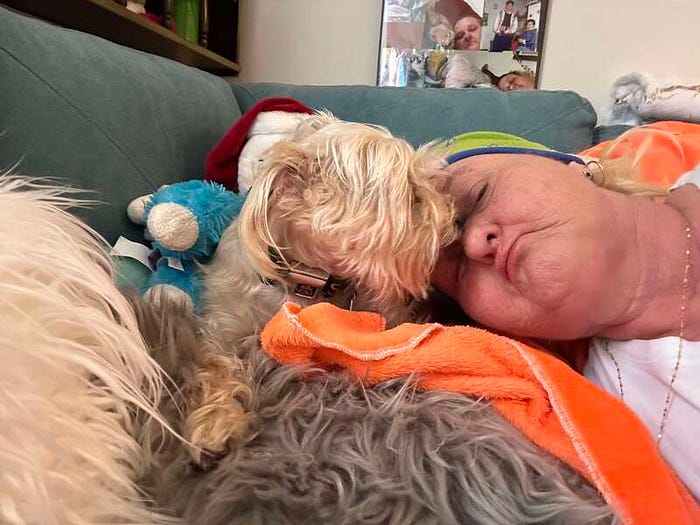
For other individuals with rare conditions, especially if you’re newly diagnosed, Ginger reminds you that the most important thing is always to trust your own instincts. If something doesn’t feel right or sound right to you — even if it’s from a doctor or nurse — then stick to your guns, push back, and ask questions.
“Don’t be afraid to ask for help,” she stresses, “and don’t leave appointments without getting the care that you need. That took me a long time to understand. It’s not worth the risk to not ask for help.”
If you would like to reach Ginger about research, or share your own story, please contact rareatives@gmail.com

 Rareatives
Leave a comment