
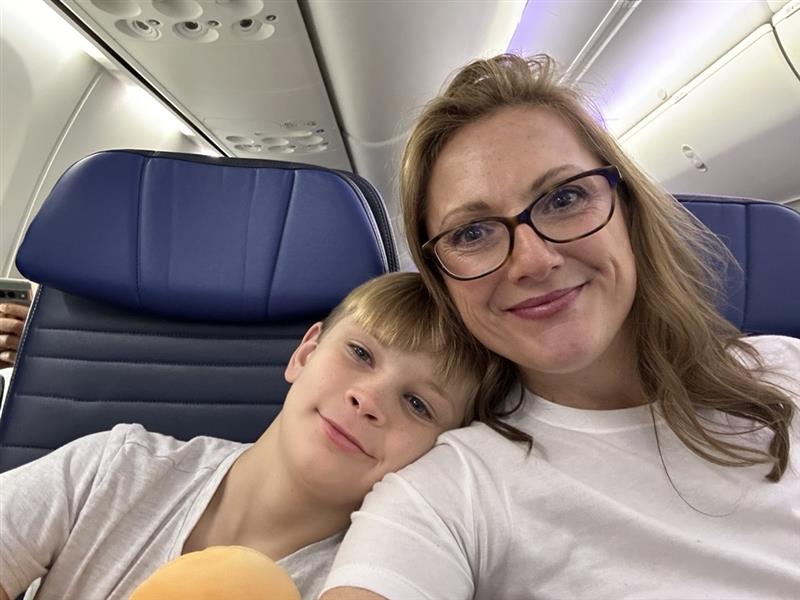
Eight-year-old Brayden has a passion for nature that knows no bounds. At home, he delights in watching YouTube videos on waterfalls and lakes. He seeks out streams and puddles during his daily two-mile walks with Mr. Jesse, his nurse. His family fully supports Brayden’s curiosity: hiking, exploring, visiting Garden State Park and multiple parks throughout Texas. In the future, their dream is a nature vacation to Tennessee.

At home, Brayden explores nature in new ways. You’ll find Brayden fully in his element at the local Tuxedo Cat’s Coffee. The real attraction isn’t the coffee or even the two resident cats. Armed with his trusty shovel, Brayden makes his way to his favorite spot: the dirt pile out back, where he’ll spend the next hour hunting for worms.
It’s a simple joy, but one that means everything to his mother Hannah, who watches nearby. With a laugh, she shares: “He brings home about twenty worms every time we go.”
Hannah, 31, sees echoes of herself in Brayden’s unique way of engaging with the world. Diagnosed with autism at 13 years old, Hannah recalls being bullied growing up: “And that’s really hard to go through as a kid.”
Still, she never allowed the bullying to hurt the person she knew she was. Like Brayden, Hannah fully embraces what makes her different. “I liked being weird then, and I like being weird now,” she says. “I don’t want to just blend in.”
It would take years before Hannah and Brayden would understand the genetic thread connecting their experiences.
The Search for Answers
Hannah had Brayden at just 22 years old. As soon as he was born, Hannah’s maternal intuition told her that her son had some sort of underlying health condition, though she wasn’t yet sure what Brayden was dealing with. “All I knew,” she explains, “is that he would need additional help throughout his life.”
Her instincts were on point. By 2017, doctors agreed to have Brayden undergo whole exome sequencing. Tests came back to show that Brayden—and, as it turns out, Hannah—had a rare mutation in the AUTS2 gene, causing what’s known as AUTS2-related syndrome.
As it turns out, AUTS2-related syndrome is incredibly rare. Australia’s Centre for Genetics Education shares that less than 100 people worldwide have been diagnosed with this condition. Simon’s Searchlight states that the number of diagnosed individuals currently sits around 112. Either way, information on AUTS2-related syndrome is relatively unknown.
What we can tell you about AUTS2-related syndrome is:
- An estimated 80% of people with AUTS2 variants had them occur de novo (spontaneously). In the other 20% of cases, the variant is present in both parent and child, like with Hannah and Brayden.
- Potential symptoms or manifestations of AUTS2-related syndrome include:
- Feeding difficulties in infancy
- Developmental delays
- Abnormally high or low muscle tone (hyper- or hypotonia)
- Intellectual disability
- Constipation
- Scoliosis
- Hyperactivity
- Short stature
- Smaller than average head size
- Autism spectrum disorder
However, it’s important to note that every person is different. What manifests in some people may not manifest in others.
While the discovery that they both had AUTS2-related syndrome was significant, it wasn’t the end of the road for either Hannah or Brayden.
“At the time of diagnosis, the geneticist told us that new genes are discovered all the time,” Hannah says, “so we should continue re-running the genetic panel every two years.”
Becoming a HADDS Advocate
In 2019, re-run tests discovered that both Hannah and Brayden had another rare developmental condition known as Hypotonia, Ataxia, and Developmental Delay Syndrome (HADDS). Caused by EBF3 gene mutations, HADDS was first discovered in 2016 and affects fewer than 400 people worldwide.
HADDS is characterized by low muscle tone (hypotonia), difficulties with balance and coordination (ataxia), and developmental delays. Other signs of this condition may appear as:
- Autism spectrum disorder
- Stimming movements such as rocking or hand-flapping
- Developmental delays
- Higher pain tolerance
- Gait abnormalities
- Failure to thrive
- Poor vision
- Strabismus
- Kidney and urinary disorders
- Seizures
- Neuropathic itch
- Constipation
- Mental and behavioral issues, such as schizophrenia or mental health struggles
“Learning that I also had HADDS explained a lot about me,” Hannah reflects. “I was diagnosed with autism when I was thirteen and scoliosis when I was fourteen. I didn’t have many of the medical symptoms back then, but those have developed over time. As I’ve gotten older and read more about HADDS, it really resonated with what I was dealing with. It was, in a way, a relief. It validated my experiences.”
Because HADDS, like AUTS2, lacks awareness, Hannah’s physicians were unable to give her much information. “Beginning the journey was difficult,” she says, “because nobody could tell me anything about life expectancy and what I could expect for my son. I absolutely understand the fear behind these rare diagnoses.”
A pamphlet on syndromes without a name sparked Hannah’s interest in research. But the information online was still sparse at best. One of the most challenging aspects of a rare disease diagnosis is the sense of isolation it can bring. Finding others who understand the journey can seem impossible.For Hannah, everything changed the night she discovered a Facebook group for families affected by HADDS.
“They are some of the nicest people I’ve ever met,” she gushes about the online community that has become a family to her.
“I’ve learned so much about HADDS from speaking with them. I’ve noticed that many children have issues with walking. It helped me to find that because my son had issues with walking as a kid. I was 22 when I had him. I thought I was doing something wrong. But finding out that he has HADDS, and seeing others who were dealing with the same things, made me realize that I wasn’t alone. I wasn’t doing anything wrong.”

Spotlight: The EBF3 HADDS Foundation
Through the group, Hannah also learned more about the EBF3 HADDS Foundation, a 501(c)(3) non-profit organization dedicated to promoting awareness, research, and support for individuals living with HADDS and their families.
Founded by parents and caregivers, the EBF3 HADDS Foundation serves as a hub for information and advocacy. The Foundation facilitates connections and conversations between families, funds critical research initiatives, and holds exciting events like the 2024 HADDS Conference.
Beyond providing information, the HADDS Foundation plays a vital role in building community. They organize regular virtual meetups, maintain resource libraries for families and medical professionals, and bring together affected families with leading researchers and clinicians.
These gatherings provide invaluable opportunities for families to share experiences, learn about the latest developments in HADDS research, and connect with others who truly understand their journey.
While HADDS and AUTS2 research has moved forward in recent years, many questions remain—and there’s still much to learn about both conditions. To Hannah, this research is increasingly important.
“I would like to see why the cerebellum is smaller in HADDS—what causes that and if there’s anything that can be done for it. Does that relate to the high rate of mental illness? Can we find ways to provide more psychological support for this community?” Hannah asks. “When it comes to the brain, I’m also interested in how and why the rate of intellectual disability is so high in AUTS2. Where is that coming from?”
Hannah is also particularly interested in understanding the connection between HADDS and various gastrointestinal issues, including the severe constipation that affects many patients. The rarity of these conditions makes research challenging, but every new case adds to the medical community’s understanding.
Hannah’s Advocacy Mission
Beyond research, Hannah sees the EBF3 HADDS Foundation as an ideal avenue of support for people in the community. “The foundation has been absolutely instrumental in our journey,” she explains. “When you’re dealing with a condition this rare, having a strong organization behind you makes all the difference. They help families navigate everything from getting a diagnosis to finding specialists who understand HADDS.”
In fact, Hannah believes in the Foundation’s mission so much that she joined as a board member. Her responsibilities include contributing to media coverage, organizing virtual community events like a Thanksgiving Zoom gathering, and planning the Foundation’s 2026 conference.
“It only takes one person to make a difference,” she says with a smile. “So a group of people advocating for the same purpose have the potential to change the world.”
Her role with the Foundation also carries a deeper and more profound significance: advocating for others who cannot always advocate for themselves.
“Some of the children and adults with HADDS can’t speak. They’re very intelligent but don’t know how to get things across in their voice. Helping them advocate for themselves brings me joy,” she explains. “As an adult with HADDS, I love showing people that I’ve grown up and done well. It gives hope to these families. Because it can be kind of hopeless when you have nobody to look up to. I love being that beacon of light and of hope.”
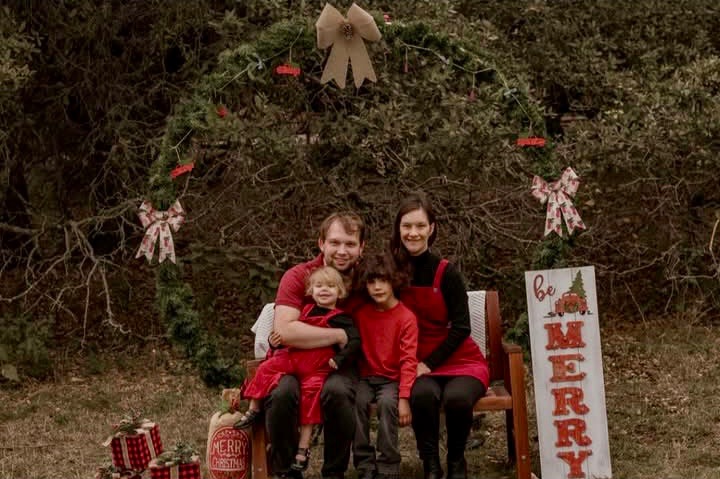
Looking to the Future
For Hannah and Brayden, living with AUTS2 and HADDS does have its challenges. “We have six therapy sessions a week for Brayden,” Hannah explains, listing them off. “We’re waiting on ABA therapy. Brayden also sees an ophthalmologist, pulmonologist, neurologist, and psychiatrist.”
The overlap of two rare conditions creates unique challenges in coordinating care. Each specialist needs to understand not only their area of expertise but also how the two conditions might interact. It’s a delicate balance that Hannah navigates daily, ensuring each treatment approach takes both AUTS2 and HADDS into account.
Yet between these appointments, Brayden lives life with infectious enthusiasm. He’s bright and intelligent with a smile that lights up the room. Perhaps most heartening for Hannah has been watching Brayden’s relationship with his two-year-old sister.
“Before having our daughter, I wasn’t sure that I was prepared for two kids. I was a little scared about their relationship,” she admits. “Now I see them and think, ‘This has been amazing.’ They have an absolutely incredible bond.”
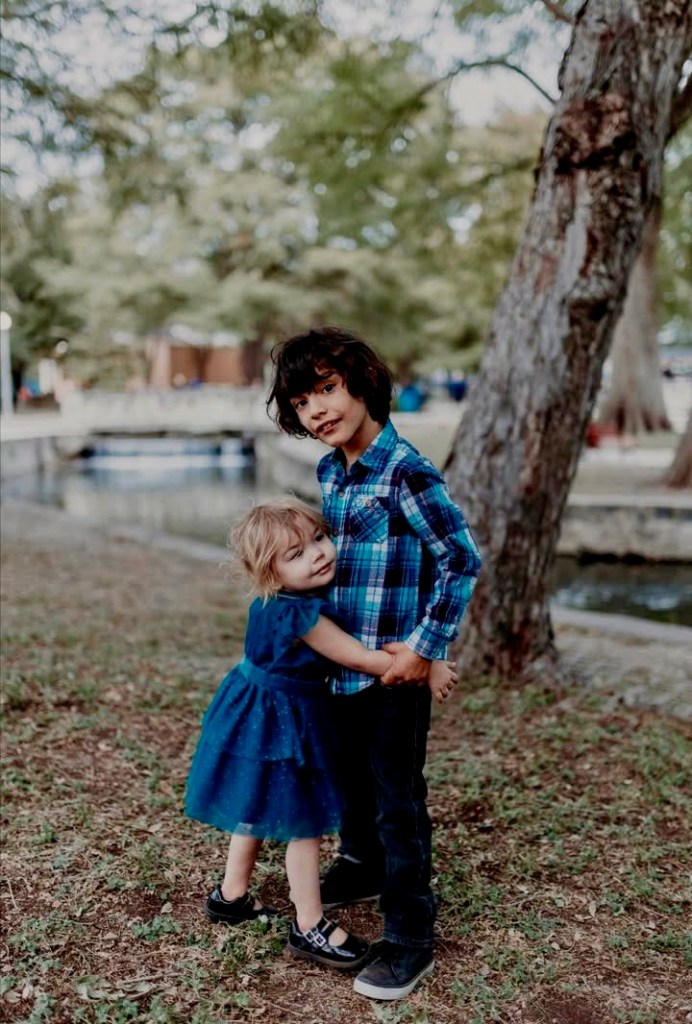
These daily victories help balance the challenges. They act as reminders that while rare diseases may shape a family, they don’t define the joy and love within it. And Hannah’s home is full to the brim with love and light.
As she looks to the future, soon to begin her graduate program in Social Work, Hannah feels proud of the life and family she has built—and proud of Brayden for everything he has overcome so far.
“I hope his mental health doesn’t suffer. I hope he’s able to live independently or at least be assisted independently,” she says. “I hope he continues to develop in his life. I hope he knows how special and rare he is. And for the other kiddos, I hope they know how special they are as well even having a rare disorder. I know it can be difficult. But together, I hope more awareness is raised and advocacy is brought to HADDS and AUTS2.”
Hannah remains committed to raising awareness and fostering understanding of both conditions. “I reached out because I thought, ‘if I can get my voice out there to help other people and help my son, it only takes one person,’” she explains.
Through her openness in sharing their story, Hannah is already making that difference, one conversation at a time.
**************
Are you a researcher, medical professional, or advocacy group interested in learning more about HADDS or AUTS2? Hannah welcomes collaboration opportunities to advance understanding of these rare conditions. For more information about HADDS, please visit the EBF3 HADDS Foundation. Researchers and advocacy groups interested in speaking with Hannah about either HADDS or AUTS2 can reach out rareatives@gmail.com and we would be happy to make that connection.
 Rareatives
Leave a comment