
Carrie Difilippantonio was scheduled to speak for four minutes in front of the Colorado state legislature during a stakeholder meeting on opioid policy and pain care. Brought to the meeting by the Colorado state chapter of Don’t Punish Pain, Carrie had prepared carefully for the meeting: studying the proposed legislation that would impose new restrictions on pain medication prescribing, shaking her head at the Morphine Milligram Equivalent — “which has been disproven,” she tells me pointedly.
Armed with printouts of the legislation, highlighted with relevant statistics and implementation dates, she approached the podium and began to speak. “I explained that my drug metabolism is different,” she says, “and I can really get screwed over if there’s 31 days in a month but I only get 30 days of medication.”
Eleven minutes later, Carrie, who has been diagnosed with twenty rare diseases including Ehlers-Danlos syndrome and Sjögren’s syndrome — “and then I stopped counting” — was still speaking. Twenty minutes of questions from legislators followed. Her testimony had transformed from a brief story to an impromptu educational session regarding the unintended consequences of opioid restrictions.
State representatives who had arrived with predetermined positions found themselves considering the issue from a new angle: that many individuals with rare and/or chronic illnesses require pain medication to function, but that medication is often withheld in a well-intentioned, but poorly implemented, attempt to prevent opioid abuse.

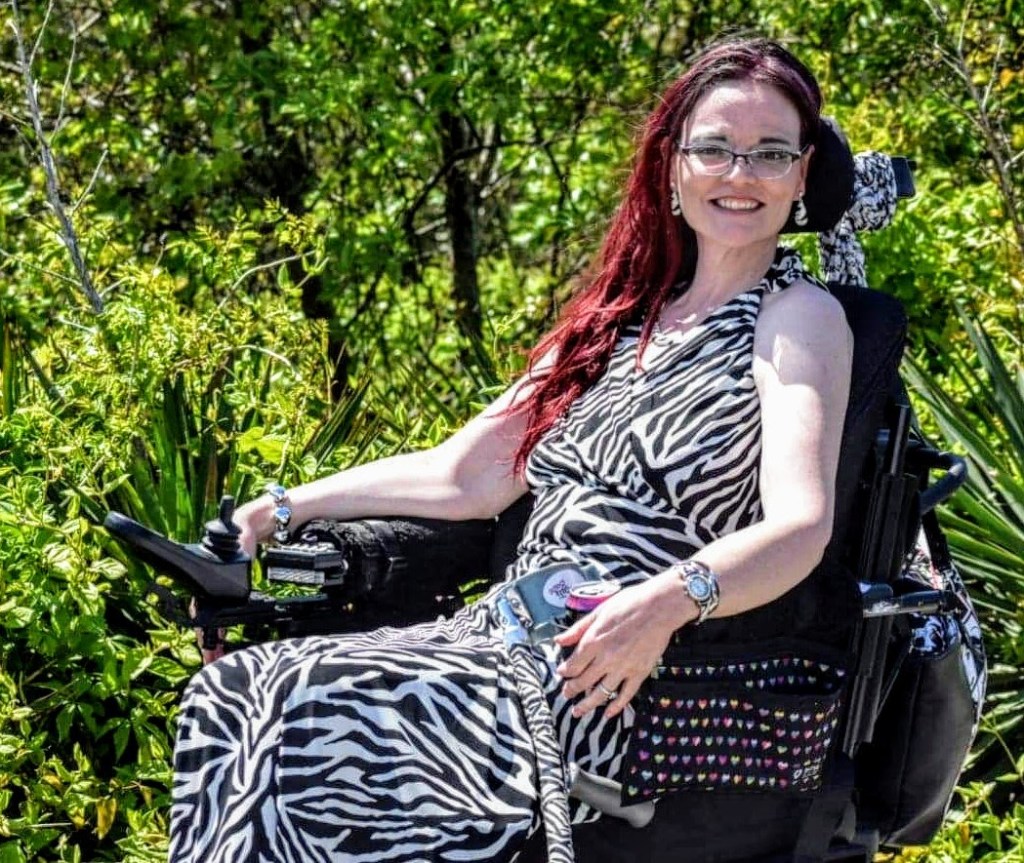
At 44 years old, Carrie has built a policy advocacy approach that blends her lived experience with her scientific background — she taught biology labs at the collegiate level and has done work with Pfizer, Septodont, and Tolmar.
Now, she’s sharing her story with Rareatives to continue her advocacy pathway and support the needs of others in the rare space.
A Student Faces New Struggles
In 2011, Carrie was in the middle of her Master’s degree program at Colorado State University, where she was pursuing her degree in Educational Leadership, Renewal, and Change.
The bruises that began to pop up across her body were, at first, an occasional inconvenience. Perhaps she had knocked into a desk or table while studying, or had accidentally tripped over something in her apartment.
But the bruises gradually increased in frequency and severity. By the time Carrie’s doctors ran tests, her platelet count had plummeted to 4,000 per microliter of blood. For context, normal platelet counts range from 150,000 to 450,000 platelets per microliter of blood. Platelet counts below 20,000 indicate severe thrombocytopenia, which can cause life-threatening spontaneous bleeds or hemorrhages.
Doctors immediately placed Carrie on a no-touch protocol where she was isolated from all physical contact. Her condition was so severe, she says, “my parents drove three days to say their goodbyes to me.”
But with what Carrie describes as “a massive dose of prednisone,” her platelets rose to 30,000 — enough to be discharged from the hospital, but far from safe or normal levels. With just one semester left to achieve her degree,including finishing her thesis and passing state exams, Carrie had to make a decision on how to proceed.
Unfortunately, she experienced little help from her fellow classmates or medical professionals, who stated that she’d be fine since other people lived with this condition too. Their cavalier attitude towards her health became a recurring theme throughout her life.
That April, Carrie started a five-week cycle of chemotherapy and Rituxan “to target my antibodies. They were attaching to platelets and making them too big to function properly, which made my spleen remove them.”
Her treatment plan also included avoiding sunlight, as bruises blossomed across her skin if she spent any more than ten minutes in the sun.
By May, her platelet count had risen to 70,000 — but the pain she felt on a daily basis was nothing short of unbearable. “It hurt to be touched,” she admits. “Even my four-pound dog sitting on my lap would make me ache.”
Doctors decided a splenectomy would be the best treatment option to stabilize her platelet counts — and it did, Carrie says, though her platelets remain missized, misshapen, and chemically imbalanced. Still, the treatment corresponded with an incredibly busy period in her personal and academic life: “I graduated on Saturday, celebrated Mother’s Day on Sunday, and had my spleen removed on Monday.”
Medical Deserts and the Challenges of Geographic Discrimination
Soon after graduating, Carrie took a job teaching at the high school level in West Texas, which encompasses approximately 30 different counties. But her health grew progressively worse: infections, kidney stones, undiagnosed Postural Orthostatic Tachycardia Syndrome (POTS). She ended up medically retiring from teaching after one semester.
During this time, she frequently visited physicians for support but notes that “getting a quality doctor in West Texas is a joke. They didn’t know what to do with me.”
The region’s medical infrastructure proved to be inadequate for someone with more complex needs. Local physicians operated with inefficiencies that bordered on negligence.
The urologist, for example, “scheduled everyone for 1pm daily on a first-come, first-served basis. You’d get there at 12:30pm and not be seen until 4pm.”
Not only can this type of practice be dangerous for people needing care — especially somewhere like West Texas that is considered a medical desert, or an area where people cannot easily access high-quality or specialty care — but it can prevent those with time restrictions or strict job requirements from pursuing or receiving care when needed.
Eventually, Carrie moved to Michigan to live with her parents, reflecting the commonality of individuals with rare diseases often having to travel or move hundreds or thousands of miles to find doctors with relevant expertise. At this point, she says, “I couldn’t walk. I couldn’t stand. I couldn’t handle the pounding of my heart in my ears.”
The move did solve one piece of the puzzle when University of Michigan physicians diagnosed Carrie with hypermobility and mixed connective tissue disease (MCTD), a rare autoimmune disorder. However, doctors failed to grasp the severity of her condition, simply brushing Carrie off as “super bendy.” The contrast between her lived experiences and the medical dismissal she faced illuminates how medical providers often lack a strong understanding of how rare conditions affect daily function.
Surgeries and Diagnoses Kept Rolling In
In the coming months and years, Carrie faced a series of invasive procedures designed to ease some of her varied symptoms:
- A hysterectomy for adenomyosis
- Several surgeries for Morton’s neuroma in the ball of her foot that left her with tarsal tunnel syndrome (TTS) and necessitated over a year of physical therapy for severe and painful neuropathy
- A G-tube and J-tube, as well as looping her intestine twice around her duodenum, for undiagnosed gastroparesis and weight loss
She eventually moved away from her work with Pfizer in Kalamazoo, Michigan. Once back in Colorado, she worked in a midsized pharmacy company then a small sized pharmacy company. These two pharmas taught her more about “variant responders.” She finally understood that in the previous 20 surgeries prior, she had never been truly numbed.
Carrie continued navigating her expanding collection of diagnoses and interventions: auditory processing therapy for newly-diagnosed Meniere’s disease, thrice-weekly physical therapy for her toes, and a stellar collection of mobility aids.
Learning to manage Meniere’s disease was especially challenging. “With Meniere’s, you’re not supposed to have any salt, but POTS requires salt and electrolytes,” Carrie explains. “It’s been a horrible challenge trying to find a balance. I learned to put up with down days in bed or, if I push it too much, weeks in the hospital.”
At the same time, some of her surgeries and interventions represented a positive step forward in her journey. A primary care physician fresh out of residency near-immediately clocked that Carrie likely had hypermobile Ehlers-Danlos syndrome (hEDS), which was soon confirmed — along with autonomic dysfunction, also known as dysautonomia — through comprehensive testing at the University of Colorado Boulder.
Soon after, Carrie found an ankle surgeon willing to develop specific protocols for individuals with hEDS. Hypermobile Ehlers-Danlos syndrome can cause altered drug metabolism, leading to hypersensitivity to some medications and reduced sensitivity to others.
“Lidocaine isn’t always effective for hEDS,” Carrie explains, “but the ankle surgeon worked collaboratively with me with topical ointments and higher-dose pain medication.”
After several successful ankle-stabilizing surgeries, Carrie was thrilled to learn that she could once again move her toes. In the time since, she’s sent several other people with hEDS to the surgeon for additional support, highlighting the importance of community engagement in the rare disease space.
But Carrie was not yet done — these procedures simply set the stage for a future surgery that would change Carrie’s life and reinforce her advocacy focus.
A PAO with Lasting Effects
Between her ankle procedures, Carrie underwent a periacetabular osteotomy (PAO), also known as the Ganz procedure. During the complex surgery, surgeons dislocated her femur from the hip socket, broke and reshaped her pelvis to create a deeper socket, then repositioned everything with additional repairs.
Surgeons also installed a cadaver labrum and reshaved her femoral head and neck to prevent ongoing joint destruction. Altogether, Carrie spent 12 hours in the OR.
The surgery itself was successful, and initial recovery proceeded according to plan. Carrie spent five days in the hospital and had to navigate with mobility restrictions, like not sitting at a 90-degree angle or having to learn how to go up and down stairs.
Her hope? The surgery would prevent her hip from dislocating and provide improved function. But, on the day she was discharged from the hospital, rife with optimism, a disaster occurred.
“I used my walker to hop to the bathroom and went to sit down, but my toilet riser wasn’t anchored,” she explains. “I fell onto my freshly broken pelvis. I had to go back to the hospital, where I spent three days trying to get the pain under control.”
The accident left Carrie with Complex Regional Pain Syndrome (CRPS) “from the underwear line to the tips of my toes.” CRPS is a disorder in which disproportionately intense pain occurs spontaneously or from sensory stimuli. This disorder is considered one of the most painful chronic pain conditions, and left Carrie with a host of problems.
Managing CRPS
As she reflects on her CRPS, Carrie remembers a time when she couldn’t sit for more than 30 seconds without crying. “Even now,” she tells me, “I can’t sit with any pressure on my left hemipelvis and need to drive reclined, shifted to the side. I have tried so hard. It’s been seven years, but I can’t sit right.”
But this led to issues with her elbows — six months after the original injury, Carrie tore the tendon in her elbow while pushing herself into a reclining wheelchair — and her knees, where the cartilage has started to tear and her patella subluxes during sleep.

“My knee doesn’t dislocate when I wear my knee-ankle-foot orthoses (KAFOs),” she says, “but it triggers my mast cell issues. Sometimes I wake up looking like I just did five rounds in a boxing match: blood in my mouth, a red and swollen face. And all from contact allergies.”
The Dismissal of Pain Patients
Following her PAO, and throughout her long recovery, Carrie was given a prescription for opioid pain medication — fairly standard for such extensive procedures. However, when her mother went to fill the prescription, the insurance company refused coverage.
Her doctor, recognizing the procedure’s intensity, immediately mailed a new paper prescription that insurance claimed they would cover. Still, days later, Carrie was left with nothing but all-consuming pain. She shares, “I was a newly single mom of two kids, trying to get help, but insurance was still saying they wouldn’t cover it.”
Local clinics told Carrie her case was too complex for them to help, reflecting a common experience of rare patients: they often must bounce around searching for care because of provider unwillingness to step in.

Eventually, the physical toll from inadequate pain management became too much. At her 30-day post-op appointment, Carrie was forced to drive for thirty minutes, sitting only on the right side of her pelvis, before hopping and wheeling herself into the facility.
The pain was so horrific, Carrie told her doctor, “that I’ve thought about ten ways to die just to escape it.” The nurse at the facility called the police.
While Carrie had been expressing the severity of her pain — “I never wanted to kill myself,” she stresses. “I just needed relief from the pain.” — it was instead interpreted as suicidal ideation, leading to an intervention that completely missed the point of why Carrie was distressed in the first place.
Eventually, her psychiatrist, “who honestly said he’d be worried if I wasn’t depressed,” found someone to help Carrie again with pain management. But for people with rare conditions, it’s never that easy. Just four months later, her insurance decided that it would “go through state law now. So I was cold-turkeyed off my medication during Thanksgiving week.”
Unfortunately, the dismissal of pain patients is a common occurrence. One study found that, in adolescents with chronic pain, 20-35% experienced dismissive reactions or under-treatment; studies have also found that, in adults, women with chronic pain are less likely to be believed by doctors.
Pair that with the difficulty in receiving pain medication, with many pain sufferers mistakenly marked as addicts, and an atmosphere is created where pain sufferers find themselves experiencing self-isolation, negative thinking, anxiety, and depression.
This isn’t to say that addiction isn’t a problem. But, Carrie says, “The committees that make decisions about pain medication and pain legislation are often heavily skewed towards substance use disorder. People who were former addicts, nurses and doctors who dealt with addiction — they’re who are on these committees. Where are the pain doctors? The pain patients?”
A Push for More Advocacy
The struggles that Carrie faced brought her to the Don’t Punish Pain event in Denver — and it was this event that led to additional opportunities within the pain advocacy community.
She met a state representative who wanted to help change Colorado’s legislation, and invited Carrie to participate in additional meetings and policy discussions. Her final meeting in Colorado, on her birthday, included high-level state officials; Carrie also brought a surprise guest of her own, a clergy to testify about addiction and pain issues.

After having changes made in Colorado, Carrie began to speak to other states like Florida about relaxing legislation around pain medication access. Her work eventually led to the inclusion of legitimate pain patients and specialists on committees about policy changes, allowing them to share their voice in discussions that will directly affect their access to care.
“Having pain doctors and patients on these committees has another benefit,” Carrie says. “It’s great to reassure people: no, it’s not in your head. You’re not alone. If you have a rare disease that manifests in pain, that is misdiagnosed and mistreated, your pain may worsen. Rather than psychiatrizing symptoms of rare diseases and contributing to medical gaslighting, we have the ability to address this issue through education and representation.”
Building Community
Two months later, Carrie drove to meet her now-husband William, a 12-year active-duty Navy member. In the first four years that Carrie and William were together, the couple survived Carrie’s six experiences having sepsis, William’s deployments (including sea duty on the USS Truman), several small heart-attacks, mini-strokes, and multi-week hospitalizations.
“He’s been with me almost the entire time I’ve been in the wheelchair,” Carrie tells me. “He’s so patient and so incredible, and I’m grateful to have him.” William stands in stark contrast to Carrie’s previous marriage. Her ex is every rare patient’s worst nightmare, refusing to go to surgeries or chem oand having no support for Carrie.
But after spending time with William that one weekend, Carrie visited Washington, D.C. to testify before the FDA. It was surprisingly emotionally challenging.
“I had listened to so many people talk about how opioids destroyed their families, and to the guy who created suboxone. Meanwhile, I was trying not to have an anxiety attack while speaking about how the Johnson and Johnson opioid settlement affected pain patients because I felt like I was talking to someone who had assaulted me,” she explains. Her response reflects the complex trauma pain patients experience when their medical needs become politicized and their legitimate suffering is conflated with addiction issues.

Still, this introduced Carrie to other advocates in the pain scene, including Cindy Steinberg, who had gained national attention by testifying before the U.S. House Representatives while laying in a cot. This demonstration highlighted how severe chronic pain can affect patients while they attempt to participate in reform efforts. Most commenters on social media said it was a stunt to get sympathy, however, they have no reason to feel what she goes through on a daily battle with high impact, intractable chronic pain. Since meeting Cindy, Carrie has done work with the U.S. Pain Foundation and was one of just seven people to get certified this year through the organization’s pain program.
“I’m glad I’ve gotten the education that I have,” Carrie reflects. “I’m very proud that I can help such a diverse group of people.”
Her advocacy hasn’t stopped there. Carrie and William crashed Senator Warren’s Presidential Town Hall in Norfolk, VA and showed up at a town hall for the first Trump impeachment in Colorado with her son, who was also on crutches — mid-sentence, US Representative Joe Neguse stopped, pointed at Carrie, and said, “I need to hear your story.”

“What keeps me moving forward,” she says, “is when people open up to me and I can advocate for them. I’m helping the granddaughter of a woman I met at Rare Disease Week who has bad EDS and gastroparesis. I’m helping active-duty and veteran patients in my area by saying, ‘Hey, if you have these rare symptoms, let’s talk.’ That’s been a good challenge for me.”
Teaching Advocacy Measures
Of course, there are 300 to 400 million people worldwide living with a rare disease; it’s impossible to speak with each one directly. By sharing her story, and educating other patients about their healthcare rights, Carrie hopes that she can at least reach them indirectly.
“I was always taught to shape up, dust yourself off, and keep going. While that mentality can be good, that same toxic positivity caused me to do so much more damage to my body. More than that, I’ve been passed from specialist to specialist and I’ve been gaslit. I honestly cannot think of a single doctor who hasn’t gaslit me,” she says. “So I want other patients to know: you have to learn how to advocate for yourself. You have rights but you have to know what they are and stand up for them so you don’t get bowled over or pushed into a crack.”
For people with Medicaid and Medicare, Carrie stresses that you have additional rights — and you should ask for them. She recalls how she was having a new port put in during her second bout with sepsis when, after not being sedated enough, she had a panic attack and was forced to discharge. When she came back later, she noticed that on the back ofa form, “it says you have the right to refuse discharge. If you don’t agree with your nurse’s decision, make them look over your chart and decide if you can stay.”
Additional ways to protect your rights in healthcare encounters include:
- Never being alone: “Don’t be alone, even if it means having someone on the phone,” she says. “And if medical staff claim that you can’t have someone with you, remind them that you are allowed under ADA legislation.”
- Know the hierarchy: “When you’re in the hospital, start by asking for the floor nurse, then the patient advocate,” she says. “If you’re not getting help from the advocate, speak with risk management — that’s when heads really turn. People say not to make waves with people who are caring for your health. But if they’re not taking care of your health already, why wait?”
We Need to Change the Way We Understand Rare
As she looks towards the future, Carrie hopes that certain legislative and policy changes can make a difference for pain patients and people living with rare diseases.
She identifies a crucial gap in genetic testing and specialist availability, noting, “I hate hearing, ‘Oh, that’s not my field. Go see a different specialist.’ I want to see people identifying the problem. There are many geneticists that specialize in pediatric conditions or cancer. But my research has shown me that genes connect: there’s a lot of interrelation between EDS, MCAS, Sjögren’s, and other conditions associated with collagen-affecting genes. If we can more concretely show that this is a cluster disease, we can get statistics to put towards funding.”
Carrie also hopes that both specialists and the broader public can better understand that many people with rare diseases face challenging situations and deal with significant health impacts on their lives — and that talking about these impacts is reality.
“If I speak up about my battles, I’m either pitied or bashed for making my life seem worse than everybody else. But there are so many people who have it easier than me, and so many who have it worse. We are all just fighting to get through our days,” she says.
Then, with a small sigh, she reinforces the importance of speaking up: “I’m barely holding myself together with duct tape right now, and I wasn’t diagnosed until I was 37. If I was diagnosed when I was 11, like my son, and put into physical therapy, who knows where I’d be now? To have been validated, to have gotten hope — that would’ve been huge. By teaching people not to dismiss these symptoms and experiencing, maybe we can give that hope to others.”
Carrie Today
Over the years, Carrie has dealt with more medical procedures than most people can even imagine. She has dealt with massive connective tissue damage, over 100 injections in her joints, a hiatal hernia that was surgically repaired twice, and Multiple System Atrophy (MSA) that leaves her without much of an appetite or the ability to sweat.
“I’ve been told that I’m on borrowed time now,” she says, a reminder that people with rare disease often come face-to-face with their own mortality. “There are a lot of quality-of-life measures I need to consider now: IV hydration therapy, ports, pain management.”
It’s a tricky subject. In the immediate future, she will have both of her ankles stabilized again, repeat tarsal tunnel surgery, and her knee scoped and patella anchored to the femur. For Carrie, it means debating her next steps — a possible above-the-knee amputation for her left leg.
“I want to feel like a whole person, not just a deflated balloon without a leg to stand on, literally,” she says.
To Carrie, one of the greatest quality-of-life measures she can achieve is the ability to ride motorcycles with her husband. “William and I own a beautiful Harley, and he takes me riding whenever he can,” she says. “When I’m on IV therapy, we put the bag and pump in the saddle bag and it pumps the whole time. I can go for hours on pain medication and hydration. When I’m not on pain meds, I can go forty minutes. So my decision on my medical care hinge on: how does this help me achieve the quality-of-life I’m looking for?”
She is also undergoing a skin biopsy for small fiber neuropathy in order to get approved for IVIg therapy. This medication is expensive because it takes 10,000 plasma donations per dose to make. “I am a great reason people should donate a couple times a week, plus it gives donors the opportunity to make some cash,” she says.
Geneticists for non-cancer conditions or adults are few and far between. Carrie is going through the process of researching every possible gene that is affecting her poor quality of life: for example, not only the 92 genes affecting connective tissue, but also the 358 genes for Primary Immunodeficiency. Other good genes to test for in variant responders are genes around drug metabolism (for opioids and antidepressants in particular).

The future remains uncertain. But no matter what it brings, Carrie is ready to help: not just for herself, but for the millions of others with rare diseases who feel like they’ve been relegated to the margins.
“When shit hits the fan, send up smoke signals. Call me. Text me. I will be here for you so you can have someone who has seen it too,” Carrie says. “I want you to be validated. And down the road, you can share that knowledge with someone else. When we empower one person, we empower each other.”
 Rareatives
Leave a comment