
Dan “Dry Dock” Shockley sat in front of his computer screen, adjusting the camera angle so the poster behind him was visible. Always Forge Ahead with a Purpose it reads in bold letters, surrounded by pathology slides and surgical photos. On the other side of the screen, 60 genetic counselor trainees waited for him to begin his presentation for Genetic Counselor Appreciation Day, an annual event held on the second Thursday of November.
Dan has presented to stakeholders and students within the healthcare community dozens of times now, from lecture halls for the University of Hawaii’s GI Residency Program and Stanford’s Master’s program in Human Genetics and Genetic Counseling to virtual classrooms in Greece and Singapore. Each time, his goal is clear. “My purpose is to educate medical students,” he tells me, “about attenuated familial adenomatous polyposis (AFAP), continuing the legacy, and the importance of early detection and prevention. Through this, I hope to save lives.”
Dan, who was diagnosed with AFAP fourteen years ago, recognizes that there’s a stigma in place that sometimes prevents people, especially men, from pursuing preventative care. This is especially true when it comes to colonoscopies, which can be crucial in catching AFAP before it progresses to colorectal cancer. By sharing his story with Rareatives, Dan hopes not only to teach medical students and professionals more about AFAP, so they know what to look out for, but to destigmatize colonoscopies and other preventative measures that can be crucial for protecting health.
Dan’s Story
Military service taught Dan to plan for the worst and hope for the best. Twenty years in the U.S. Navy, including tours during Operation Desert Storm, Operation Enduring Freedom, and Operation Iraqi Freedom, gave him a framework for handling adversity: adapt, improvise, and overcome.
“I tend not to think about things beyond my control,” Dan explains. “Instead, I think about what I can control: my attitude. Even if my mood is free-flowing, I try to maintain positivity and keep my strong faith.”
When he retired and settled in Hawaii, Dan thought the hardest fought battles were behind him. But he didn’t know that he was about to face a new challenge. At 51 years old, in 2012, Dan went in for a routine colonoscopy. He explains, “In the military, every year we had a physical, so I continued to do that after I retired. I knew that, once you turn 50, colonoscopies are recommended and thought it would be a good idea.”
Just like that, Dan’s life changed. Despite having no symptoms and no family history of colorectal cancer, his doctor found approximately 100 colorectal polyps embedded throughout his colon, rectum, and anus, and one polyp was causing an 80% blockage in his ascending colon. Dan was immediately referred to a genetic counselor for further testing.
Six weeks later, he received an official diagnosis of attenuated familial adenomatous polyposis, a rare hereditary cancer syndrome. His APC gene mutation, located on his fifth chromosome, occurred de novo — meaning it occurred spontaneously rather than being inherited. “This occurs in about one-third of cases,” he explains.
What is Attenuated Familial Adenomatous Polyposis (AFAP)?
Familial adenomatous polyposis (FAP) is a rare condition which causes hundreds of pre-cancerous polyps to form in the colon and rectum. Polyps may also form in the upper gastrointestinal tract. Without treatment, Dan explains, “These polyps have a 100% chance of becoming colon cancer.”
People with FAP usually begin developing polyps in their teens or early twenties, requiring monitoring and prophylactic surgery. Attenuated FAP is a sub-variant of FAP. Unlike FAP, which affects people ages 50 and younger — “all my colleagues have a family history, are symptomatic, and have colonoscopies every three years,” Dan says — AFAP usually affects individuals older than 50, with colon cancer manifesting, on average, around age 55.
Research also suggests that individuals with AFAP typically develop fewer polyps than those with FAP. This, paired with the later onset, makes AFAP both harder to detect and easier to miss until polyps have already progressed toward cancer.
Individuals with AFAP also have an increased risk of developing other forms of cancer in the thyroid, stomach, small intestine, or pancreas. Additionally, people with AFAP can develop a benign eye lesion called congenital hypertrophy of the retinal pigment epithelium (CHRPE), which Dan has.
The Importance of Preventative Care
To Dan, colonoscopies and preventative screening measures are immensely important for early detection and cancer prevention. He shares, “If I had had any other tests instead of a colonoscopy, I would have had cancer by the time it was caught. I know it can be hard for men to talk about their health and there’s a stigma of going to the doctor, or getting a colonoscopy. I want to silence the stigma here. This is nothing to be ashamed of or embarrassed about.”
He also recalls a TV commercial from the 1980s for an oil filter. In the commercial, an auto technician states that customers can be for an oil change now or potentially an entire replacement later. “To me, preventative care is similar,” says Dan. “Have a colonoscopy now or you might have to have major surgery later.”
In Dan’s case, he knew from the time of diagnosis that he wanted to undergo surgery. Two weeks later, he had a total proctocolectomy to remove the colon and rectum. Dan now has a permanent ileostomy. The surgery was invasive, but Dan harnessed his positive attitude and pushed forward.
Or, as he might say now, forged forward. About one year following his surgery, Dan woke up in the middle of the night with the words “forge ahead” on his mind. He scrawled them down on a notepad — and these same words later became his driving motto “Always Forge Ahead with a Purpose,” a play on his AFAP diagnosis.
Continued Care
Following his surgery, Dan needed regular endoscopic surveillance to monitor for polyps in other areas where AFAP could cause problems, particularly his small intestine, stomach, and pancreas. But as he underwent continued medical care, he also began outreach within the AFAP community.
“Dr. Henry T. Lynch discovered AFAP — Lynch syndrome, another hereditary cancer disorder, is also named for him — and it turns out my surgeon and Certified Genetic Counselor were colleagues with Dr. Lynch,” says Dan. “I was invited to one of his academic lectures at the University of Hawaii Cancer Center. After the lecture, Dr. Lynch graciously went through my DNA results and pathology with me and my Certified Genetic Counselor. He told me I had a unique case, considered me a colleague, and encouraged me to have routine endoscopic surveillance and email him [Dr. Lynch] my pathology reports.”
Dan did exactly that, sending Dr. Lynch his medical updates until Dr. Lynch passed away on June 2, 2019 at 91 years old. Lynch died on National Cancer Survivor Day, a coincidence Dan found deeply meaningful given the doctor’s work advocating for cancer patients.
Lynch’s encouragement also helped solidify Dan’s sense of purpose. If his case interested one of the world’s leading cancer geneticists, then Dan knew his story had value for medical education. He could help train the next generation of doctors and genetic counselors by sharing his lived experience with AFAP.
A Second Rare Diagnosis
After moving to California, Dan began as a patient at Stanford Medical Center. In 2020, his medical team at Stanford discovered a three-centimeter adenoma (a typically benign tumor) in his duodenum, the first section of the small intestine. In AFAP, adenomas have the potential to become adenocarcinomas, which are cancerous.
Treating the adenoma required another intensive and invasive surgery. As Dan explains, “My pancreatic surgeon went 30 cm beyond that to remove approximately 60 centimeters of the duodenum. He removed my gallbladder and inserted a 5-French pancreatic stent.”
After his pancreas-sparing surgery, Dan’s genetic counselor recommended a more comprehensive genetic screening. He agreed, wanting to gain the most insight into his health. But the test, which analyzed 148 genes, came back with a surprise. In addition to confirming the AFAP diagnosis, the test showed a rare LZTR1 mutation. The diagnosis? Schwannomatosis.
According to the Neurofibromatosis Program at the Heersink School of Medicine, schwannomatosis is a rare, recently identified form of neurofibromatosis. Schwannomatosis, which usually manifests in adulthood, can cause the formation of schwannomas (tumors) on the spinal cord and peripheral nerves. “Schwannomatosis can affect neurological processes,” says Dan.
Symptoms of schwannomatosis may include:
- Chronic pain
- Headaches
- Vision changes
- Numbness or tingling
- Changes in bowel or urinary function
Finding Humor in Challenging Situations
Having both AFAP and schwannomatosis makes Dan’s case even more unusual, especially as he doesn’t yet seem to have any schwannomas, at least as far as doctors can tell. However, his neuromuscular doctor wants to learn more, so she is setting up a variety of brain and spine MRIs, as well as dermatology and cardiology appointments.
A recent brain MRI at Stanford came back showing nothing unusual. Dan, who shares that “humor is the best medicine for me,” couldn’t resist joking with his medical team. With a laugh, he says, “I kept telling them, ‘See? Nothing there!’”
He then adds, “It’s my body and my genes. Humor is a way to loosen up the tension that can come with waiting rooms or test results. I share it wherever I can, whether I’m talking about men’s mental health or on pathology platforms or even discussing next steps with my gastroenterologist and pancreatic doctors. After all, they know me from the inside out. Literally.” For Dan, laughter also makes it possible to talk more openly about complicated topics that can be uncomfortable for some people to discuss.
Advocacy and Education
Over the years, Dan has immersed himself in advocacy, driven to change the medical understanding of AFAP. “I’ve talked to some medical students who are familiar with the mutation and the condition, but they don’t know any patients actually living with AFAP,” Dan explains. “I want to change that.”
Dan views two specific opportunities as crucial to change: research and outreach. On the research side, Dan follows peer-reviewed publications about AFAP and stays current on new findings. Still, he emphasizes how much research has yet to be done. He hopes that sharing his case with researchers and medical institutions will contribute to the global knowledge base while encouraging more in-depth exploration, and international collaboration, into better understanding and treating rare conditions.
Informing physicians and genetic counselors is also incredibly valuable. “I look for any opportunities to educate others,” Dan tells me. “During my military experience, I traveled to over twenty countries during the course of my career. My goal is to do that for my live virtual presentations, and educate people both in America and worldwide.”
The response, so far, has been immense. Dan has spoken about his AFAP diagnosis and surgical interventions to GI residents, discussed his case with medical students at the UT Health Center, and acted as a patient educator at Stanford. His virtual lab case presentation for the University of Athens shared information to 350 genetic counselor trainees, and his interactive case study with the National University of Singapore (NUS) Yong Loo Lin School of Medicine reminded trainees that rare diseases don’t always follow predictable patterns.
More recently, Dan was chosen by Nicole Sheahan, the President of the Global Colon Cancer Association, who he met at a conference in 2015, to be part of the Knowing Is Worth the Wait campaign. The campaign, which launched near the start of January 2026, serves to highlight how biomarker testing can give deeper insights into colorectal cancer and help inform more targeted treatment plans for affected individuals.
State-Level Support
Dan’s outreach and advocacy also exists on a state level. For years, Dan acted as an ambassador for the Kentucky-based Colon Cancer Prevention Project founded by Dr. Whitney Jones, including sharing his story for a “Survivor Spotlight.”
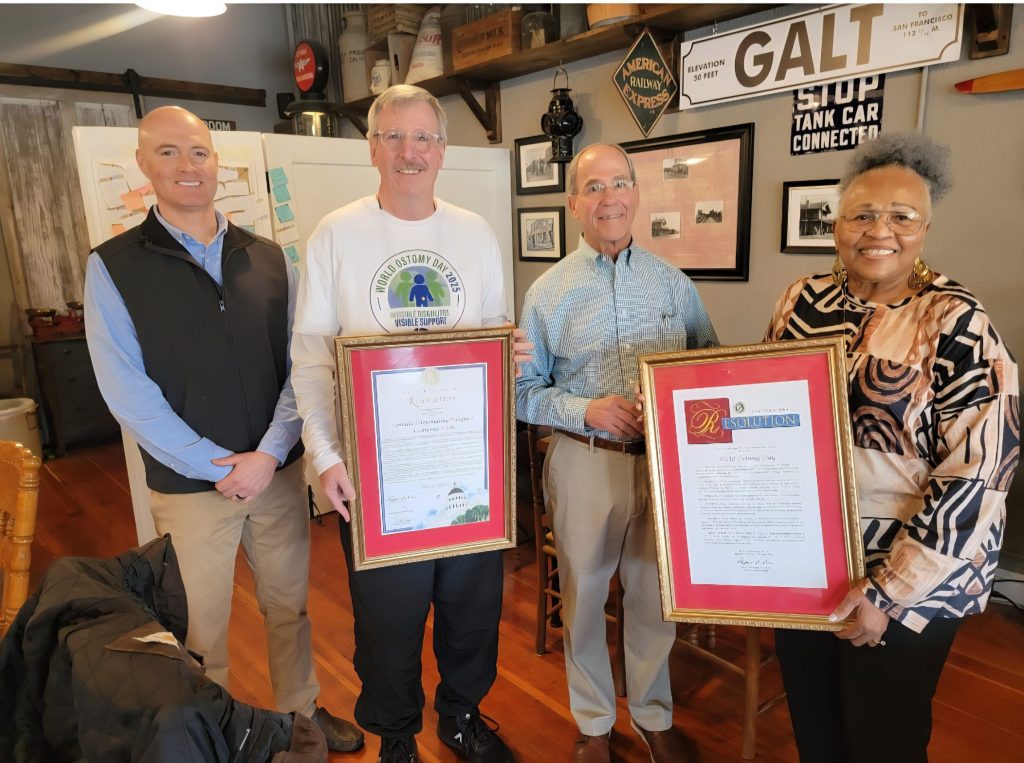
Dan has also collaborated over a period of several years with California State Senator Roger Niello, who Dan shares has been extremely supportive of the cause.
“In 2023, Senator Niello introduced a Senate resolution at the legislative session to designate the first Saturday in October as Ostomy Awareness Day. It was incredible getting to sit in the gallery and to see how that resolution has continued raising awareness in the years since,” Dan shares. “Then, last year, we did a march for Colorectal Awareness Month.”
Senator Niello has also helped establish FAP Awareness Week — “I piggybacked with my colleague in Michigan with FAP, who also asked his governor,” says Dan — and set forth a member resolution on World Ostomy Awareness Day this past October. “When I asked if we could sponsor a Rare Disease Day Senate concurrent resolution, Senator Niello said there is one being drafted that he would like to co-author,” Dan adds.
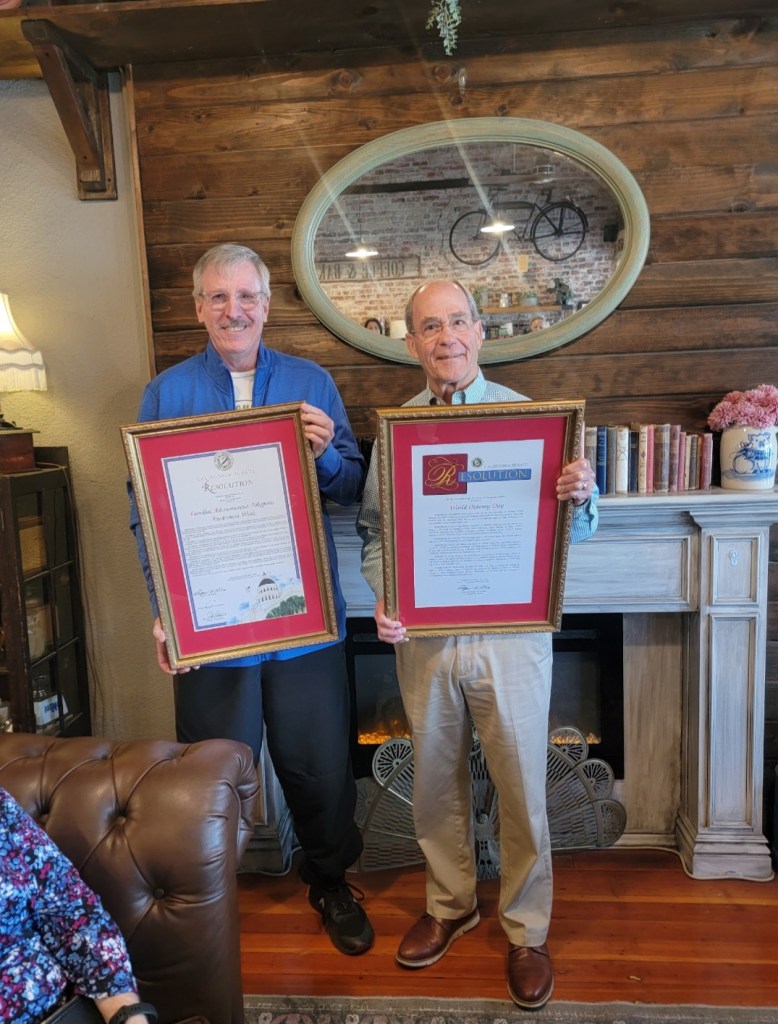
The work that Dan and Senator Niello are doing has the potential to reshape the rare disease space, both in encouraging greater knowledge around rare disease and amplifying the needs of the FAP and AFAP communities. It’s incredibly powerful for legislators to work directly with their constituents to advance these causes.
Dan’s Final Thoughts
To Dan, sitting back after his diagnosis was never an option. He knew that being diagnosed with AFAP, although it might present its own challenges, was an opportunity for him to change the lives of others. To inspire them and promote the lessons on positivity and resilience that have been so profound in his own life.
“I hope that whoever hears about my journey has a source of inspiration and encouragement,” he tells me, “especially when it comes to screening and preventative care. Get to know your family history. Talk to your medical team. Know what you need to get screened for. Put any concerns out there. When you become symptomatic, that takes your care and your situation into an entirely new direction. So please, take this seriously. Because you can protect yourself.”
If you would like to speak with Dan about his experiences, or invite him to your campus or medical establishment to speak, you can contact him at Instagram: Dan Dry Dock; LinkedIn: Dan Dry Dock Shockley or Dandrydock@gmail.com.



 Rareatives
Leave a comment