
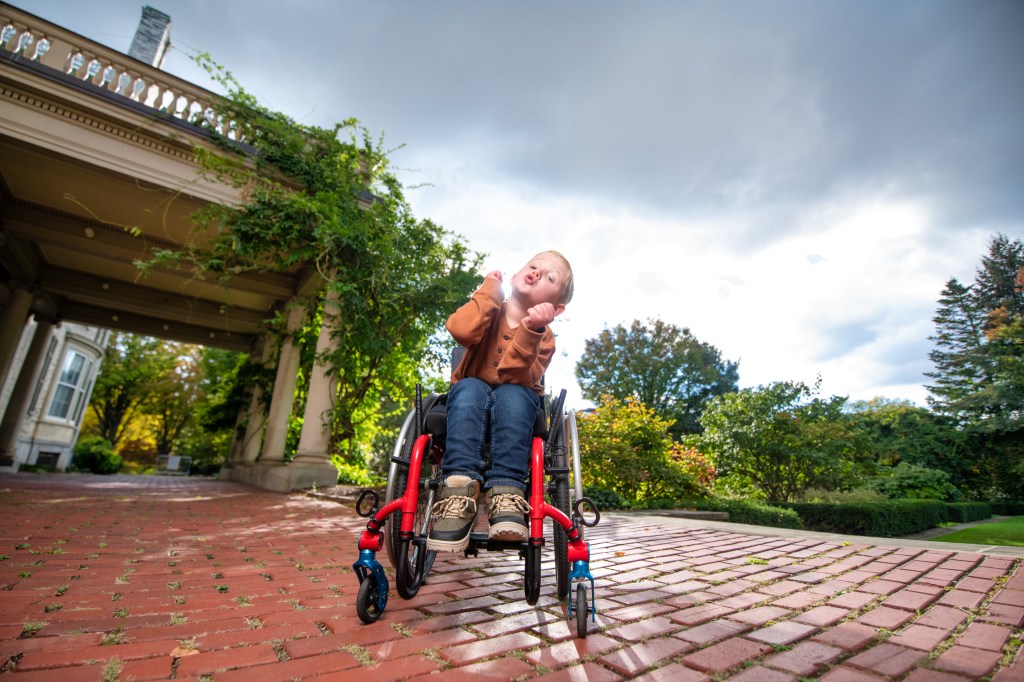
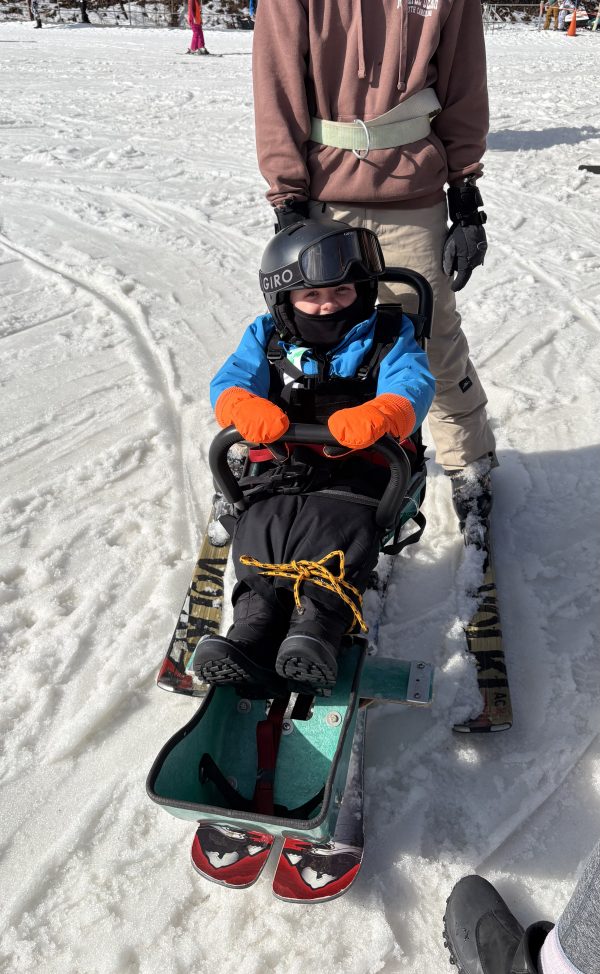
When five-year-old Bennett hit the ski slopes for the first time, he didn’t ask to start on the bunny hill. Instead, the adventurous adaptive skier repeatedly asked his parents, Megan and Jordan, whether he could go down a black diamond hill—a steep slope typically used solely by advanced skiers. To Megan, Bennett’s request exemplifies her son: charismatic, resilient, and unafraid to face life head-on.
If you had asked Megan five years ago if this is where they’d be today, she might not have known the answer. At the height of the COVID-19 pandemic, and right after Bennett’s spinal muscular atrophy (SMA) type 1 diagnosis, Megan and Jordan had no idea what the future might look like.
But now, as she looks back at the obstacles her family has overcome, Megan realizes how transformative their experience with SMA has been. She sees learning from Bennett as a unique privilege, sharing, “I came to realize that, although our journey looks different than I imagined, it is equally beautiful and fulfilling. My son has taught me more in five years than any single person in my entire life before him.”
In her conversation with Rareatives, Megan discusses learning to manage SMA during the pandemic, the many lessons Bennett has given her, and how newly-diagnosed families can find support.
Bennett’s Story
After several years of marriage, Megan and Jordan were thrilled to learn that they were expecting a son. Bennett arrived about five weeks earlier than expected. But he seemed healthy, and that’s all Megan and Jordan could ask for. “When he was born, Bennett showed no signs of SMA,” says Megan.
Shortly after birth, Bennett underwent newborn screening. Newborn screening is a public health program that uses a few drops of a baby’s blood to test for metabolic, genetic, or hormonal disorders. It can be incredibly helpful for families to learn about these conditions early-on in a child’s life, especially because, for many conditions, early diagnosis and treatment can completely transform outcomes.
However, newborn screening panels are not the same in every state. Although every state currently screens for SMA, this has not always been true. New York, where Megan and her family live, was the sixth state in the country to implement SMA screening in 2018.
One week after testing, Megan received a call from Bennett’s pediatrician. His screen had come back with a result. Bennett had spinal muscular atrophy.
“Bennett’s neurology team provided us with information about SMA. But at the time of diagnosis, we were extremely overwhelmed. It was difficult to comprehend, and I was overcome with fear of the unknown,” Megan tells me.
What is Spinal Muscular Atrophy (SMA)?
Spinal muscular atrophy is a progressive neurodegenerative disease caused by SMN1 gene mutations. As Cure SMA, a nonprofit organization focused on driving research and supporting the SMA community, explains:
In a healthy person, this gene produces a protein that is critical to the function of the nerves that control our muscles. Individuals with SMA produce low levels of survival motor neuron (SMN) protein. Without this protein, those nerve cells cannot properly function and eventually die, leading to debilitating and sometimes fatal muscle weakness.
In the past, SMA was broken down into subtypes from 0 (prenatal) to 4 (adult-onset. Bennett, for example, has SMA type 1, also known as infantile-onset SMA or Werdnig-Hoffmann disease. If not diagnosed and treated, children with SMA type 1 may display signs like muscle weakness, a weak cry, or feeding difficulties. However, because newborn screening and treatment options have improved, SMA is being addressed earlier—and many medical professionals see less need to focus on specific subtypes. Instead, there’s an ongoing discussion on how to define SMA today.
These treatment options include Evrysdi, Zolgensma, Spinraza, and Itvisma. In Bennett’s case, he takes Evrysdi, a daily treatment designed to treat SMA by increasing and sustaining SMN protein in the central nervous system (CNS) and peripheral tissues. Evrysdi, taken either orally via tablet or liquid, or by feeding tube via liquid, has significantly changed outcomes for many children with SMA.
Navigating Grief
What first struck Megan, after learning more about Bennett’s diagnosis, was how variable SMA can be. “The course of SMA is ever-changing and evolving, making it difficult to predict what the future holds. That fear was paralyzing at times,” she shares.
But she also felt another emotion: grief. She explains, “I mourned the loss of what I thought our life would look like.” Her experience isn’t uncommon. Parents of children with rare diseases, as well as people with rare diseases, often grieve following a diagnosis. Because this grief may be different from the grief of a loved one dying, the rare disease community may face increased isolation through the grieving process as well.
Compounding the stress of the grieving process was the COVID-19 pandemic, which thrust our entire world into a completely frightening and unprecedented time. It’s no secret that the COVID-19 pandemic was incredibly difficult for the rare disease community.
A survey from the National Organization for Rare Disorders (NORD) found that 74% of people surveyed reported that their medical appointments had been canceled, and 69% worried about access to medication or necessary medical equipment. A 2024 study published in JMIR Public Health and Surveillance identified similar findings: the pandemic significantly disrupted healthcare access, stoked anxieties, and contributed to worsened outcomes in people with rare conditions.
In other words, says Megan, “Becoming a new parent to a premature baby diagnosed with a rare disease amidst the pandemic added another layer of fear and anxiety.”
To get through the worries, Megan and Jordan leaned hard on each other, family, and friends. They also found comfort in Bennett’s physical therapist, who began seeing Bennett when he was two months old through early intervention.
“Despite the virtual nature of those early appointments, her confidence and compassion put us at ease,” Megan says. “In a time of true isolation and fear, she was a constant sounding board. We left every appointment feeling good, and we will never forget what she did for our family.”
It was a beautiful reminder that, even in hard moments, there is always someone who will show up for you. Megan also found this through Cure SMA, which she views as a home base and resource. Attending the annual conference alongside hundreds of other SMA families, Megan has discovered a true sense of community.
And, in part, that is what drives her to share her family’s story now: “I think it’s important to find another family who faces similar challenges that you can relate to, and I want families to know they are not alone.”
A Changing Perspective
Reflecting on the last few years, Megan sees that Bennett has been an unstoppable force since birth. Despite what some people falsely perceive as limitations, Bennett lives without limits. He does understand that SMA causes his muscles to work differently than some other people. “But he also understands that SMA does not affect his ability to think, feel, negotiate, tell jokes, learn, and be a good human,” says Megan.
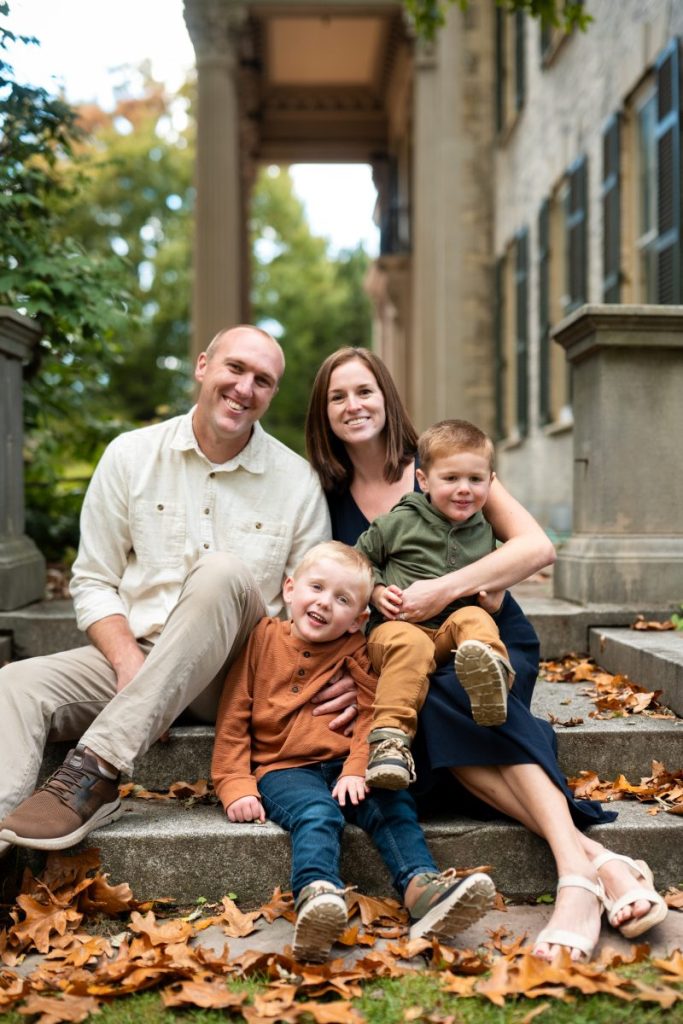
And a good human he is. Bennett is charming and funny, observant and thoughtful. Megan describes his fantastic sense of humor and he’s constantly telling jokes to make other people laugh. Nobody sees how incredible Bennett is as much as his younger brother, three-year-old Riley. They brothers love spending time together, especially when they’re traveling and doing fun family events.
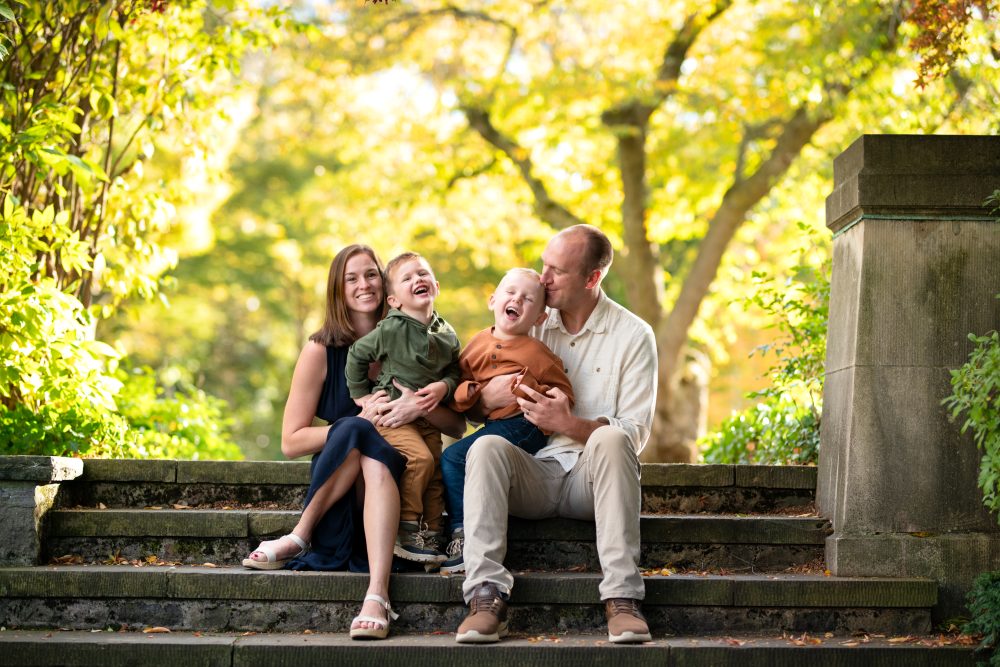
Although Riley knows that Bennett is in a wheelchair, Megan explains, “Riley doesn’t see his brother as ‘different.’ We teach the boys that we are all different and we face different challenges. Some differences are visible and others are not as visible. We teach them that we should always support one another and help each other navigate those challenges.” Watching how Bennett already mentors Riley, and how much Riley looks up to his older brother, never fails to bring a smile to Megan’s face.
Bennett is also a huge fan of sports, not only watching—“Bennett is the proud leader of a team of supporters known as Ben’s Mafia,” Megan says, a callout to Bennett’s favorite football team, the Buffalo Bills—but playing: adaptive basketball, track and field, baseball, bowling, and sled hockey.
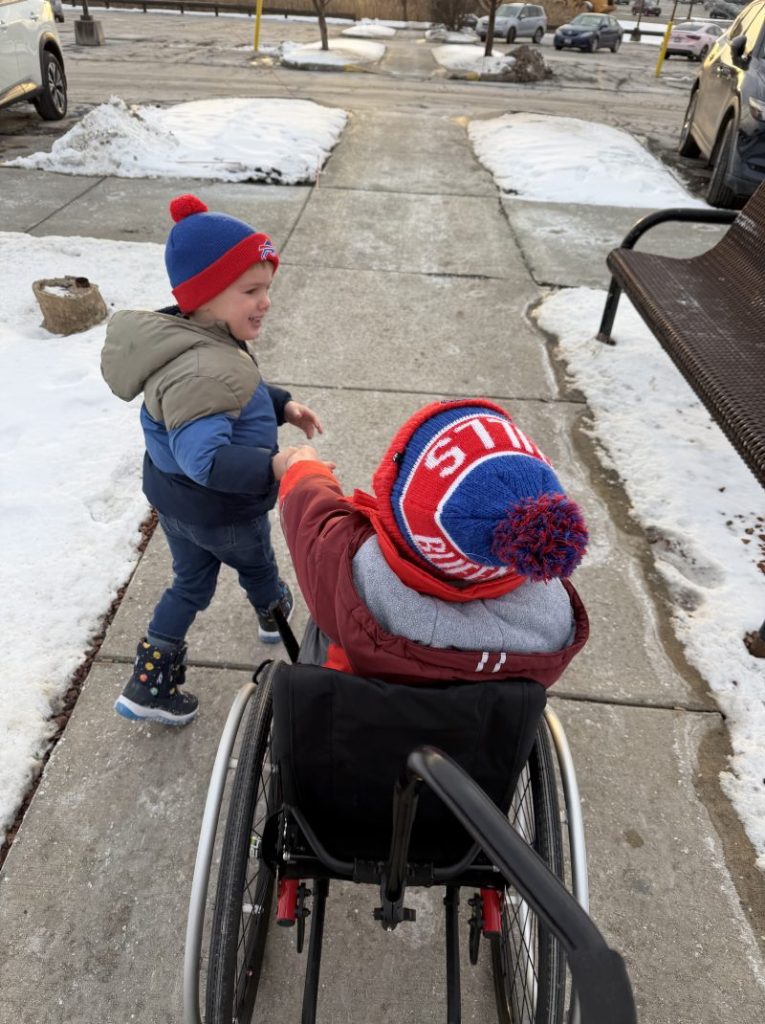
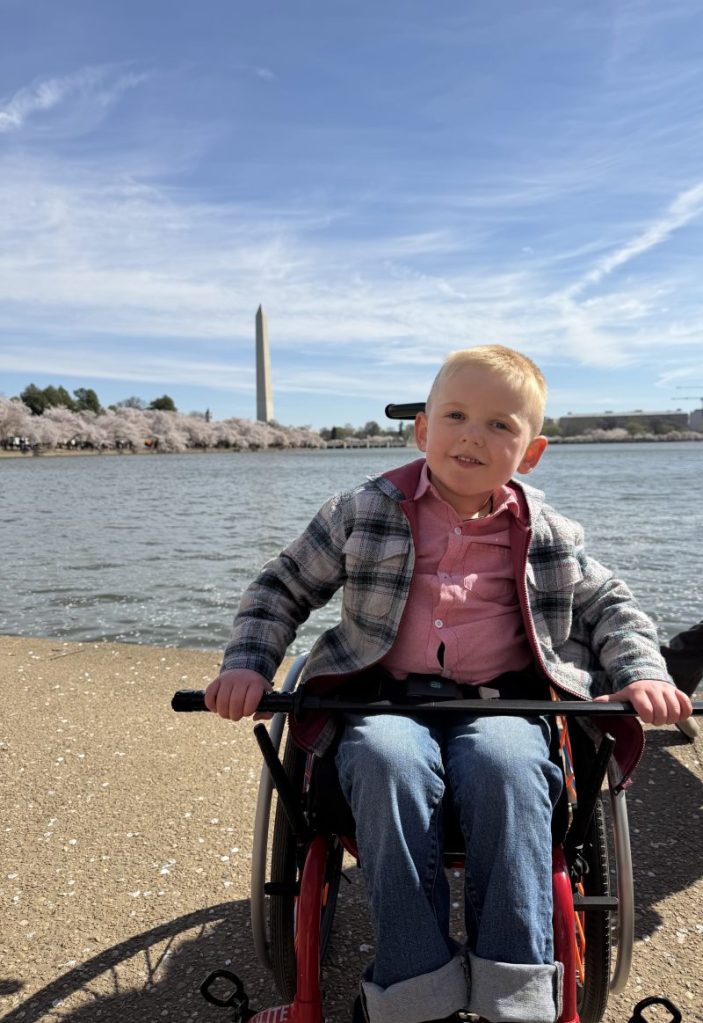
“When someone meets Bennett for the first time, his wheelchair is one of the first things they notice about him. It stands out,” Megan says. “But then he captivates people with his sweet voice, humor, energetic nature, kind spirit, and determination, and soon the wheelchair fades away. He is a light in this world and teaches people everywhere he goes that he is not defined by his disability.”
Unfortunately, there are still several stigmas or stereotypes around disability in today’s world. For example, when it comes to a wheelchair, people may make false assumptions about an individual’s capabilities—without actually taking the time to understand the person in the wheelchair. But Megan shares how damaging these assumptions can be, and how we need to change the way people understand disabilities and mobility tools.
“A misconception about rare diseases is that our child couldn’t, or shouldn’t, be invited to partake in activities out of fear that his disability would limit his participation. We want to be invited! Let us make that decision. We can adapt the activity and figure it out as we go. Our child being excluded because of his disability is one of our biggest fears,” says Megan.
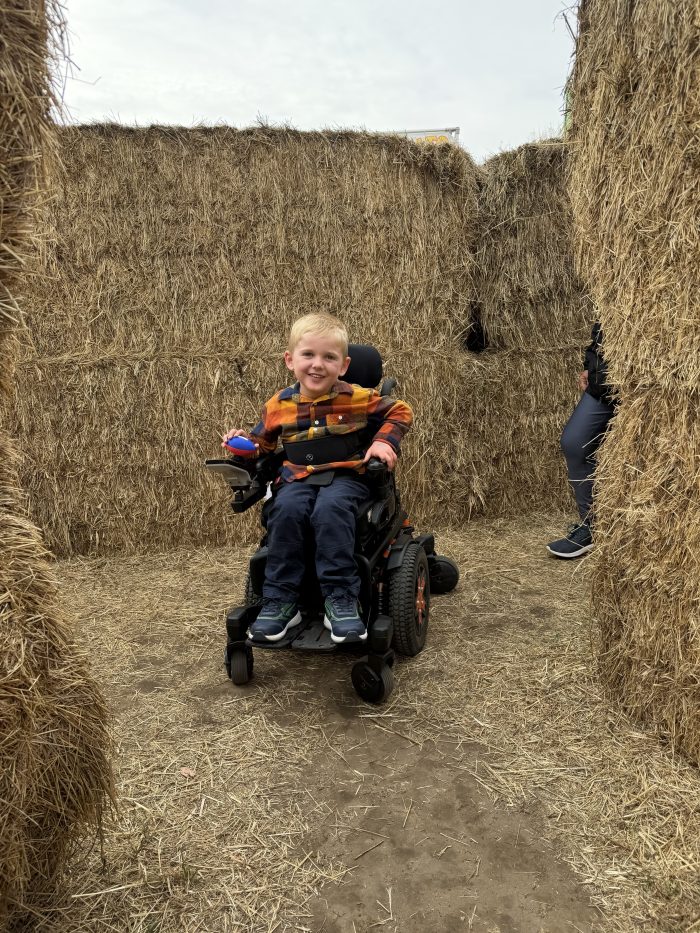
She goes on to explain that people with rare diseases, and parents of children with rare disease, don’t want to be treated differently. Although they face additional challenges, they are just trying to live, get through the week, and find community—just like everybody else.
And for parents of children with SMA, Megan wants you to know that she sees you. She sees you trying to move forward. To figure out what’s best for your child. She sees the tough times, and also the light on the other end. And she wants to leave you with this: “It does get easier. Yes, there are difficult days. But you will grow stronger and stronger each day, and those difficult days will become fewer and farther between.”
If you are the parent of a child with spinal muscular atrophy, or want to learn more about spinal muscular atrophy, check out Cure SMA. You can also find Cure SMA on Facebook and Instagram.


 Rareatives
Leave a comment