
On average, the typical adult consumes 80-120 grams of protein each day, though the number might differ based on different factors. Children consume roughly 35-50 grams of protein.
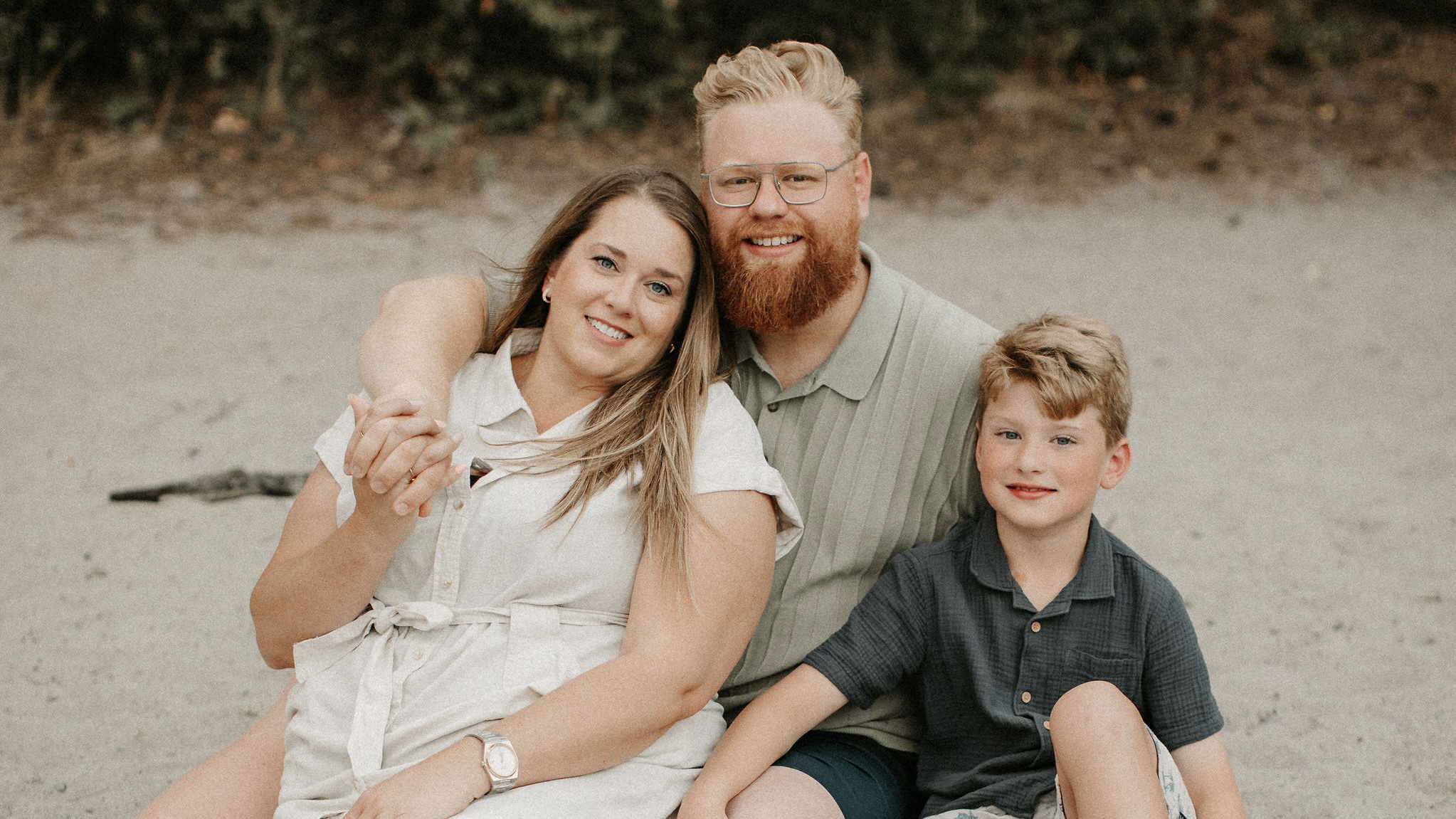
For people like Ronan, a vibrant eight (almost nine!) year old with phenylketonuria (PKU), too much protein can be toxic and harmful. PKU, a rare inherited metabolic disorder, prevents the body from properly processing phenylalanine (Phe), an amino acid found in protein.
Not everyone with PKU can consume the same amount of protein, Ronan’s mom Marjorie tells me. She explains, “Ronan can have eighteen grams a day. Some people can only have two. It really depends on the severity of their diagnosis, and whether they’re on medication or a treatment of some kind.”
For Marjorie, learning to navigate PKU has been a balancing act, and one that hasn’t always been easy. There have been challenges and roadblocks along the way. But in finding her community, and advocating for her son, she’s found a deep sense of purpose: not only as a mother, but as someone who can light the way for others dealing with a rare condition.
In her conversation with Rareatives, Marjorie discusses what phenylketonuria is, where she’d like to see future research focused, and her advice for new parents who are dealing with a PKU diagnosis.
Ronan’s Story
When Marjorie reflects on the start of her journey, she remembers a healthy pregnancy and an uncomplicated birth. There was no reason to believe that her newborn son was dealing with any potential health conditions. Still, when Ronan was born, the hospital performed Newborn Blood Spot Screening. In Canada, each province and territory manages their own newborn screening platform. In their home province, the newborn screening test screens for over over 20 different conditions, including metabolic and endocrine conditions, spinal muscular atrophy (SMA),sickle cell disease, and cystic fibrosis.
“We didn’t know much about newborn screening at the time,” Marjorie says.
On day six, when the panels came back, Marjorie received the call that would forever change their family’s life. The doctors informed Marjorie that Ronan has phenylketonuria. The next phrase was, “Don’t Google it.” Of course, that’s easier said than done. So Marjorie and her husband Brendan turned online for answers, but the prognosis and the information she found felt scary. Untreated PKU can present itself in many ways, from neurological impairments to learning deficits and more.
By the time the family met with the Genetics team at the Children’s hospital, she was wondering whether she could have done something different during her pregnancy. The doctors reassured her that there was nothing that could have changed Ronan’s diagnosis, but they were lucky to have caught it so early. Because PKU does not necessarily cause obvious symptoms in a newborn, screening is crucial in identifying babies with the condition before the effects of elevated phenylalanine become apparent and cannot be fully reversed.
They left their meeting with a large binder full of information on how to manage PKU. But the entire situation was completely overwhelming, says Marjorie: “With Ronan being our first child, we didn’t know what to expect. Then, on top of that, we were suddenly dealing with a complex brain-threatening diagnosis.”
What is Phenylketonuria (PKU)?
Phenylketonuria is a rare genetic disorder caused by PAH gene mutations. These mutations cause a deficiency of phenylalanine hydroxylase, an enzyme that usually breaks down Phe. When too much Phe accumulates in the body, it can cause neurotoxicity. Not only does it block essential amino acids from entering the brain, but excess Phe causes low neurotransmitter levels and damages the myelin sheath (the protective covering on nerve cells).
“It is quite literally brain-threatening,” says Marjorie.
The most severe form of PKU is known as classic PKU, characterized by extremely low or absent phenylalanine hydroxylase. According to Canadian PKU and Allied Disorders Inc. (CanPKU+), there are other forms of PKU, including mild PKU, variant PKU, and hyperphenylalaninemia. Ronan was diagnosed with the classic form.
Signs of untreated PKU may include:
- Musty-smelling breath, skin, or urine
- Hyperactivity
- Small head size (microcephaly)
- Skin rashes
- Delayed development
- Nausea and vomiting
- Tremors
- Neurological issues, including seizures
As of right now, there is no cure for PKU. People with PKU must remain on a low-Phe diet that excludes foods like fish, meat, eggs, nuts, soy, dairy, and products containing aspartame.
Some individuals with PKU may also use one of two medications: Pegvaliase-pqpz (Palynziq) for adults with high unmanaged Phe levels, or Sapropterin (Kuvan), used to lower Phe in people with tetrahydrobiopterin (BH4-) responsive phenylketonuria (PKU). There is also a new medication called Sephience which is proving to be very successful for some people in lowering their Phe levels and liberalizing their diet.
“A Lot of Trial and Error”
During the first few months of Ronan’s life, Marjorie and her husband were at the hospital every day. They arrived before 6 a.m. to drop off his blood sample for testing to ensure his phenylalanine levels were where they should be. Figuring out a feeding routine was its own challenge. Since Marjorie had wanted to breastfeed, it was a delicate balancing act of figuring out the proper amount of breast milk with PKU formula. Marjorie says, “Ronan was the baby that just wanted to sleep through the night. I had to set an alarm every 3 hours to feed him so he would not go catabolic.”
“Catabolic” refers to a state where a person with phenylketonuria undergoes muscle tissue breakdown (catabolism), leading to a rapid, dangerous spike in blood phenylalanine levels.
“It was a lot of trial and error, since as he grew, his needs changed. The doctors would call me and say, ‘adjust his medical formula by 10 mL,’ which is like an eye dropper,” she explains. Every adjustment seemed significant because the goal was not simply to make sure Ronan was eating enough, but to provide the nutrients he needed while carefully managing phenylalanine.
“It was an extremely stressful and emotional time for us as a family. Being given a diagnosis where management directly affects your newborn baby’s brain health is an immensely heavy thing to carry,” says Marjorie.
In his first two years of life, Ronan could only have five to six grams of protein daily. To give you an idea, a single egg contains six grams of protein. At age two, he trialed a medication that allowed him to tolerate more protein. His dietary allowance has increased because of the addition of his medication.
As Marjorie shares, “Everyone with PKU has a varying tolerance for protein. The baseline level of protein they’re allowed is usually established based on their Phe levels at or around the time of birth, then an analysis of their levels over that first year. But you can’t really set a lifelong prescription of protein in early childhood since their needs will shift in those first few years.”
Over time, however, the family learned how to manage Ronan’s diet and work with his medical team to keep his levels within the desired range. Today, he eats consistently, though “some people struggle with that,” Marjorie says, and is tested about once per month to ensure his levels remain stable.
Food as a Part of Care
For many families, deciding what to eat for dinner can be as simple as opening the refrigerator or looking at a restaurant menu. But for Marjorie and her family, making sure there’s something for Ronan requires constant planning and preparation.
“He has his daily protein amounts, which we try to divide over three meals. But we must consider what we’re doing that day, too. Is he going to a birthday party? An event? Are we on vacation? When we went on a cruise, the cruise line allowed us to bring his medical-grade food on board and helped cook that,” says Marjorie.
Medical low-protein food is limited in variety and can have coverage issues depending on where you live. As an example, a bag of low-protein cookie mix is $42. That makes one batch of cookies. A bag of low-protein bread maker bread mix is around $57. One box of pasta is nearly $30.
“Everything he eats is weighed to keep track of the protein. We track everything based on the nutrition label, as well as an app called How Much The. He’s very aware of his condition, so he’s started checking the labels himself. Of course, he’s sad in some situations where he can’t have certain food. He wants nothing more than to have chicken nuggets, but he rolls with it,” says Marjorie.
One of the most challenging landscapes to deal with is going out to eat at a restaurant. Since Ronan can’t have meat or dairy or a whole list of other things, they scour the restaurant’s nutritional guide and menu ahead of time to make sure there’s something he can have. Usually, she says, this consists of “gluten-free bread with lettuce, tomato, pickles, and a side of fries, making a ‘burger,’” though she must call to ask about the specific brand of gluten-free buns. Every gluten-free bun option can vary wildly in protein amounts. She recalls a recent visit to a local restaurant where the waiters seemed confused by the order—a children’s cheeseburger with no cheese or meat on a gluten-free bun with fries on the side—since the fries, potentially in a shared non-gluten-free fryer, and gluten-free bun seemed at odds.
For Marjorie, this preparation is one of the less visible realities of her son’s life with PKU, though arguably one of, if not the most, impactful.
Finding Community
Frequently, Marjorie shares recipes, favorite brands, or other insights into being a PKU parent on on her PKU Instagram page @this_beautiful_liphe. And she’s not alone. “There are a lot of us that have Instagram accounts and share recipes, tips and tricks, or advice, or are just a shoulder to lean on. Our most valuable tool is each other: another family who’s going through the same thing, who just gets it. We have great doctors and dieticians to manage his care, but they don’t have this lived experience. So, our biggest strength is in numbers amongst ourselves,” she says.
During the first few years of Ronan’s PKU journey, Marjorie hadn’t found that community yet. It wasn’t until she traveled to a National PKU Alliance conference that she truly found her footing. There, she connected with other families, many of whom have become close friends, who genuinely understand what it means to live, or raise a child, with PKU.
Each family goes through their own challenges, especially relating to treatment. “The approach for treatment is different all over the world,” says Marjorie. “I met a family in the U.S. who is moving states because formula is covered in the second state, but not the first. There are more treatments available in the U.S., but we have a slower uptake in Canada. We must get private insurance to access the medication we have now.”
Together, the community supports one another and pushes for increased research. To Marjorie, she hopes future research will focus on aging with PKU.
She explains, “We’re so focused on the early years of diagnosis and what a child’s life is going to look like, but we don’t think about the other end of the spectrum as much. Screening for PKU only began in the 60s. Even then, it would take nearly a decade for this to become more standard across North America and beyond. We are only just starting to see a full generation of people diagnosed with PKU. We don’t know what aging with PKU really looks like because we don’t have a full lifespan to assess.”
Currently, there is a longitudinal study recruiting individuals born in or after 1963 to understand PKU and how to better serve the community.
Ronan Today
In sharing Ronan’s story, Marjorie hopes to advance awareness of PKU. Marjorie points to an appointment with a pediatrician who was talking to Ronan about a balanced diet and a resident who was more focused on textbook definitions than what the family said works given their lived experience managing PKU. She remembers telling the pediatrician, “He has PKU, so he can’t have any of that.” To Marjorie, having physicians who listen and are willing to learn, and grow, alongside the family is important.
Marjorie also wants parents of children with PKU, and people living with PKU to know that their diagnosis is not who they are, nor is it the biggest or most impactful thing about them. Ronan is not defined by his condition. He is funny, outgoing, and active, a swimmer and member of the basketball team. He’s also incredibly creative, flexing his talents by creating art and playing the cello. When he was first diagnosed, she may not have known what her son’s life would look like, but he is beyond thriving and excelling in so many ways. You wouldn’t even know he was dealing with a metabolic condition and all the work and medical management that goes on behind the scenes.

So, to parents who are fresh on this journey, who have just received a diagnosis that feels overwhelming, you are not alone. And Marjorie wants to leave you with some advice she wishes she would have gotten nearly nine years ago: “I know you’re instantly fearing for your child’s future, but sitting in that grief of a life you had envisioned, that may look a bit different, doesn’t do you any favors. Remember to enjoy your newborn and that toddler phase. It goes so fast, and you don’t want to miss that. No matter what, you have to deal with the diagnosis. But enjoy those moments. Enjoy your child. You don’t want to look back and feel robbed of those moments, as I did. And find your community! Reach out to me any time. I love connecting with new families.”



Leave a Reply